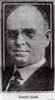
|
Excerpts - Obituary in The
Buffalo News, July 13, 1922
Born in Michigan
about 56 years ago, Mr. Good later became a partner in the firm of Seibert &
Good in Chicago, developing a chain of stores in that city.
Seventeen years ago, in 1905, this chain of stores was consolidated
with the stores developed in the east by the late Mr. [Seymour H.] Knox. Mr. Seibert
died before the consolidation.
Excerpts - Obituary in Buffalo Express,
July 14, 1922
Mr. Good began
a five and ten-cent store business in Fort Wayne, Ind., and it became so successful
that he moved to Chicago to take charge of the firm of Seibert & Good.
In 1905 Mr. Good moved to Buffalo and consolidated his firm
with that of Seymour H. Knox. The two men worked together for seven years, during
which time Mr. Good became prominent in Buffalo business circles.
In 1912 the firm of S. H. Knox was bought by the F. W. Woolworth
company and Mr. Good retired, although he was a director in the new concern.
The funeral service will be held on Saturday afternoon at
4 o'clock at the Crescent Beach summer home.
Excerpts - Obituary in Buffalo Commercial,
July 13, 1922
He started
in the five
and ten cent business in Chicago with John Felbert. Upon the death of Felbert, Good
joined [Seymour H.] Knox. When the company was made a trust company he became a director.
Shortly after he retired.
Good was life long member of the North
Presbyterian Church.
Excerpts - Obituary
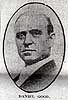
... [Daniel Good] had a chain of [five and ten cent] stores
about 15 in number. These were mainly located through the Middle West. Seymour H.
Knox was engaged in a similar business in the East and about 20 years ago the two
merged their interests, organizing the S. H. Knox Co.
Mr. Good came to Buffalo to reside at that time. He was
vice-president of the company. Headquarters of the company were in Buffalo.
Merger Great Success
The Knox-Good merger proved a great success and was the
foundation of two great fortunes. Mr. Knox was also a millionaire at the time of
his death about half a dozen years ago.
About ten years ago the S. H. Knox Co. was bought by the
F. W. Woolworth Co. One of the Woolworth stores in Main Street, Buffalo, formerly
was a Knox store.
Surviving Mr. Good are his widow, Mrs. Sarah Elizabeth Good;
two daughters, Mrs. Ellsworth Augustus of Cleveland, and Margaret Good; a sister,
Mrs. John M. Hull of Buffalo, and two brothers who reside in the West.
Mr. Good's body will be brought to his town residence, No.
864 Delaware Avenue.
Excerpts - Obituary in the Buffalo
Times, July 16, 1922
The funeral
of Daniel Good was held from his summer home at Crescent beach, Ont., ... The Rev.
Charles H. Stewart of the North
Presbyterian Church officiated at the service.
Excerpts - Obituary in the Buffalo
News, August 7, 1922
The will, which was drawn May 3, 1909, first provides that
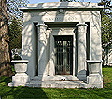
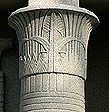
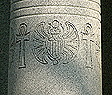
a family plot be purchased in Forest Lawn cemetery and a monument be erected not
to exceed $10,000 in cost.
[The lot was purchased July 27, 1922.]
|