Forest Lawn Cemetery - Table of Contents
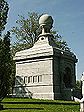
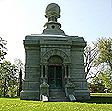
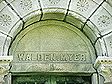
Walden-Myer Mausoleum
Forest Lawn Cemetery, Buffalo, NY
Architect: Richard A. Waite
Forest Lawn Cemetery - Table of Contents
Walden-Myer Mausoleum
Forest Lawn Cemetery, Buffalo, NY
Architect: Richard A. Waite
TEXT Beneath Illustrations
|
|
|
|
|
|
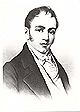
Ebenezer
Walden |
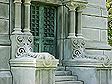
Romanesque Revival mausoleum |
According to the Maine Granite |
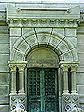
Romanesque Revival entrance |
|
|
|
|
|
|
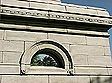
Paterae in arch |
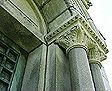
Squat Romanesque Revival columns; monumental acanthus leaves |
Acanthus leaves |
Chevron; Romanesque Revival capitals |
|
|
|
|
|
|
Rear view |
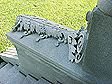
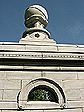
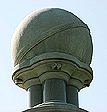
The giant globe, which symbolizes God's sovereignty over heaven and earth. |
Rear |
|
|
|
|
|
|
|
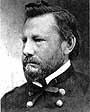
Gen. Albert Myer |
|
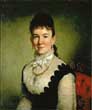
Catherine Walden Myer |
|
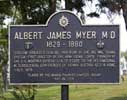
The Walden-Myer Mausoleum, Section X, contains the families of Ebenezer Walden (Buffalo's first lawyer, a Buffalo judge, mayor, and real estate developer) and his son-in-law, Albert James Myer (1829-1880).Myer earned his medical degree at the University of Buffalo Medical School.
Prognosticating the weather was a novel thing in the middle 1800s, but Brigadier General Myer did it so successfully that he founded the U,S Weather Bureau He also invented the wig-wag signal system and became the first commander of the Army Signal Corp.
The National Weather Service, Buffalo, New York, is located in the General Albert J. Myer forecast facility on Aero Drive adjacent to the Buffalo-Niagara International Airport.
Fort Myer, VA, is named after Myer; a ship is named after him.Myer's wife built the mausoleum.
Sources:
- "A Field Guide to Forest Lawn Cemetery"
- "Forest Lawn Cemetery: Buffalo History Preserved." Richard O. Reisem, ed. Pub. by Forest Lawn Heritage Foundation, 1996