|
Fierce Fire in Buffalo
Barnes, Hengerer & Co.'s Great Establishment Burned.
Adjoining Structures Damaged--Loss Over a Million Dollars--500 People
in the Building--Four Lives Reported Lost.
Reprinted from The
Daily News (online Jan. 2013)
Wednesday Evening,
February 1-1888
Buffalo --A
terribly destructive fire is raging on Main street. Fire broke out at
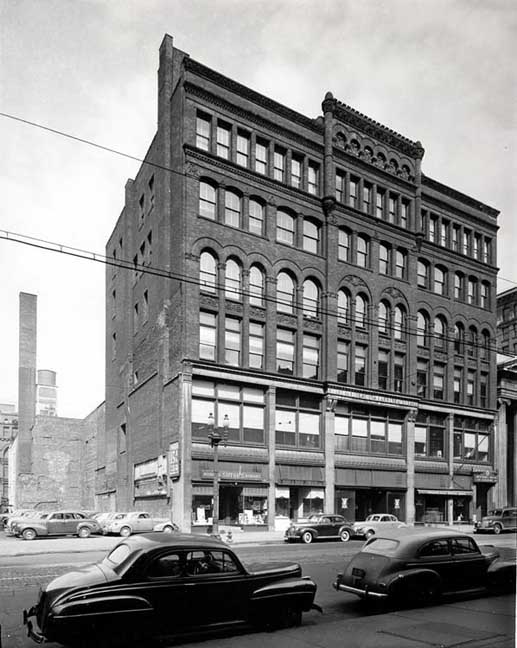
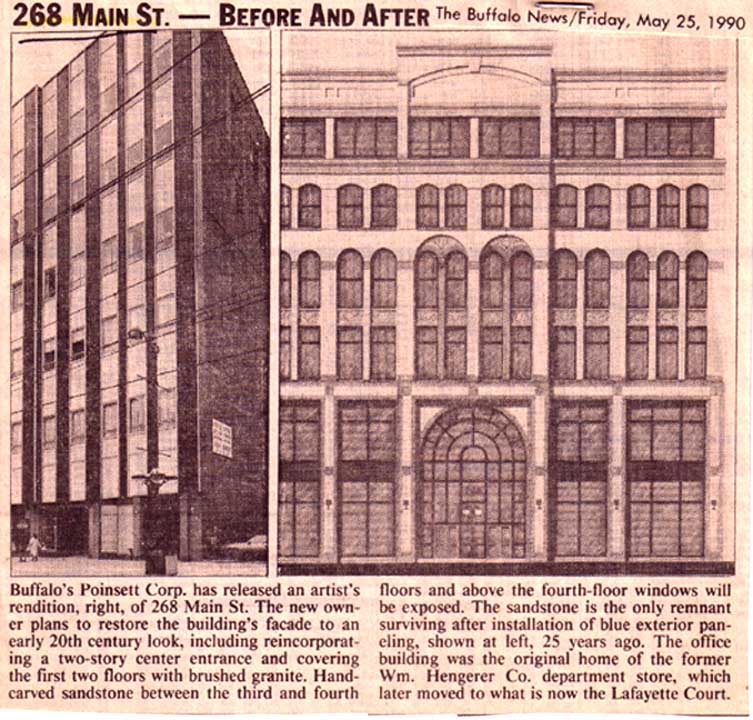
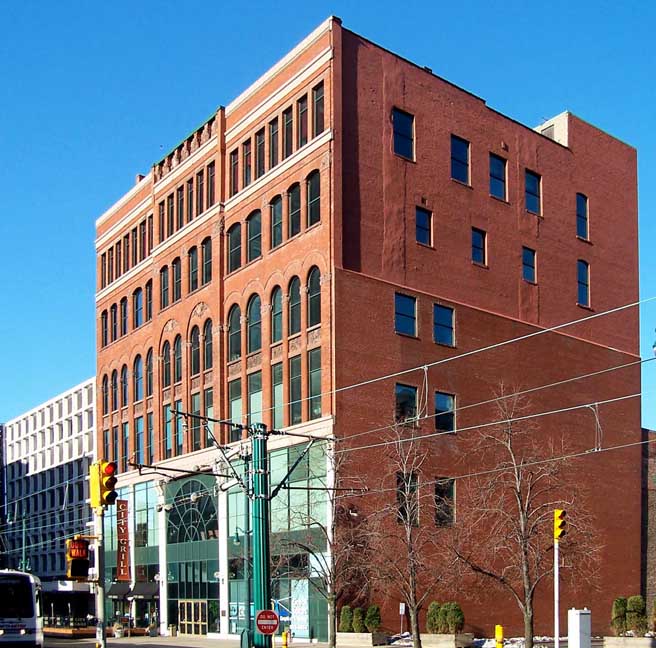
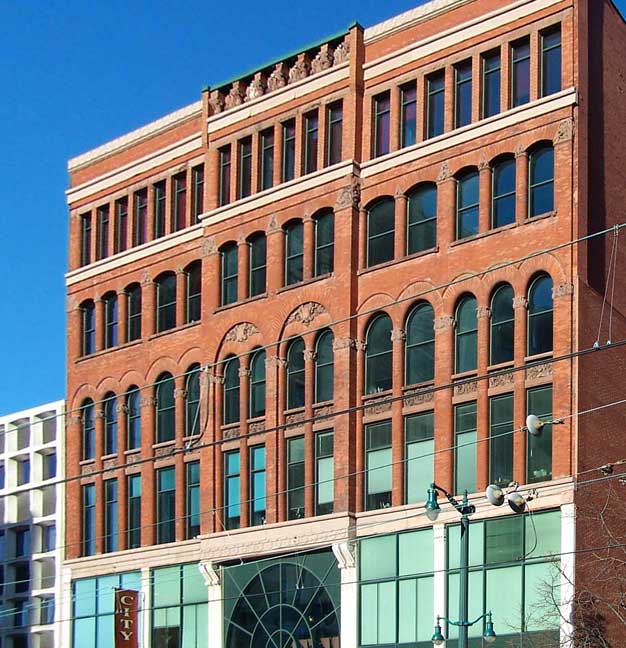
11:45 this morning in Barnes, Hengerer & Co.'s
The fire spread to the adjoining buildings occupied by DICKINSON's
jewelry store and PARTRIDGE's dry goods store and leaped across the
street to GLENNY's china and glassware emporium and MORGAN's carpet
store, and threatens the Academy of Music
[at Main & Seneca].
The Bank of Buffalo,
in the same block with Barnes, Hengerer & Co., have put all their
books and papers in the vaults and vacated the premises. The Board of
Trade building is in danger.
Barnes, Hengerer & Co.'s stock is valued at one million dollars and
the building at $250,000.
The efforts of the firemen were at once directed towards preventing the
spread of the fire and they were so far successful that the flames
obtained no foothold anywhere. Beyond the damage to the adjoining
buildings and to the front of those opposite on Main street, and also
on Pearl, the loss is confined to Barnes, Hengerer & Co. and the
building they occupied. At 1 o'clock the fire was under control.
The names of the girls said to have lost their lives are not known and
will probably not be until a roll call is made of the employees One
fireman had his leg crushed. mammoth dry goods establishment,
256 to 265 Main street, and in a few minutes the whole interior was a
mass of flames. At noon the walls on Pearl street fell in, burying in
the ruins four girls employed in that part of the store. At 12:30 the
front walls fell in, and the whole structure is in ruins.
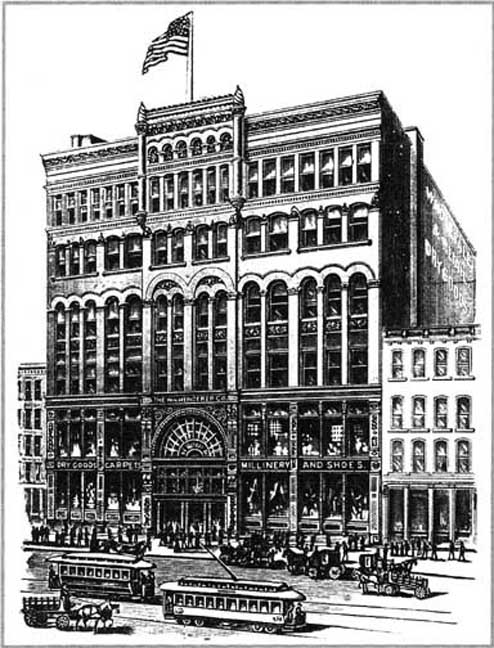
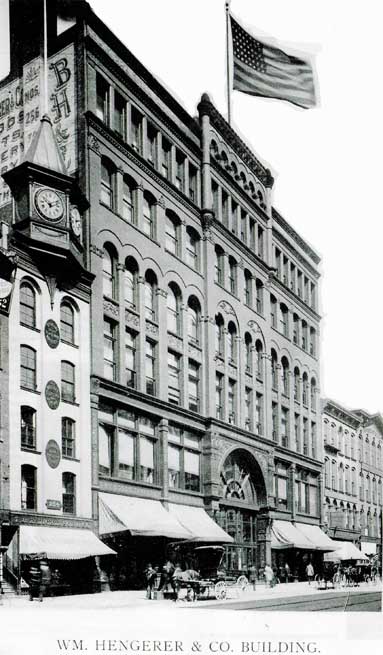
The building
occupied by Barnes, Hengerer & Co. was owned by C.J. HAMLIN, the great
horseman, and was a handsome iron-front structure.
The fire originated in the basement about the center of the building
and in an incredibly short space of time a great flame burst through
the floor. The alarm spread from floor to floor of the great building
and a rush was made for the street. There were about 500 people in the
building, half of whom were clerks, mostly women and girls. The immense
volume of flame swept through the building as though driven by a
cyclone, and bursting from the windows and doors leaped far out into
the street.
Although the fire
department was quickly on the spot, no power could stay the flames, so
fiercely were they spreading through the inflammable merchandise which
the store contained. The flames made rapid headway on the Pearl street
side of the building and it is there the four girls are said to have
been seen to fall back into the fire, but the report is as yet
unconfirmed.
The tongues of flames shooting out from front and rear stretched across
the streets and threatened to communicate to the buildings opposite.
The woodwork of several took fire, and the firemen, seeing that all
hope of saving Barnes, Hengerer & Co.'s was past, confined
themselves to saving the others. At one time it looked as though the
block between Seneca and Swan would go, and the Board of Trade with it.
This was happily prevented and though the stocks of the occupants
suffered heavily by flooding, the buildings were but slightly damaged.
The losses outside of Barnes, Hengerer & Co. are at present
unobtainable, but the insurance on this building and stock, is
considerable over half a million. The other sufferers are FLINT &
KENT, MORGAN & Son's, BARNUM's, JENNING's, interior decorations,
DENTON & COTTIER, music store, DICKINSON's jewelry store and
PARTRIDGE & Co. dry goods.
|