Kleinhans Music Hall - Table of Contents
Kleinhans Music Hall
Symphony Circle, Buffalo, NY
Erected:
1938-1940 Architects:
Eliel and Eero Saarinen, with F.J. and W. A. Kidd.
1991-2005 renovation architects - Hamilton Houston LownieAcoustical consultant:
Charles C. Potwin Style:
Modern / Neo-Expressionist Status:
- National Register of Historic Places Landmark
- Buffalo Landmark
- National Historic Landmark (1989 - a rare honor for a building under 50 years of age)
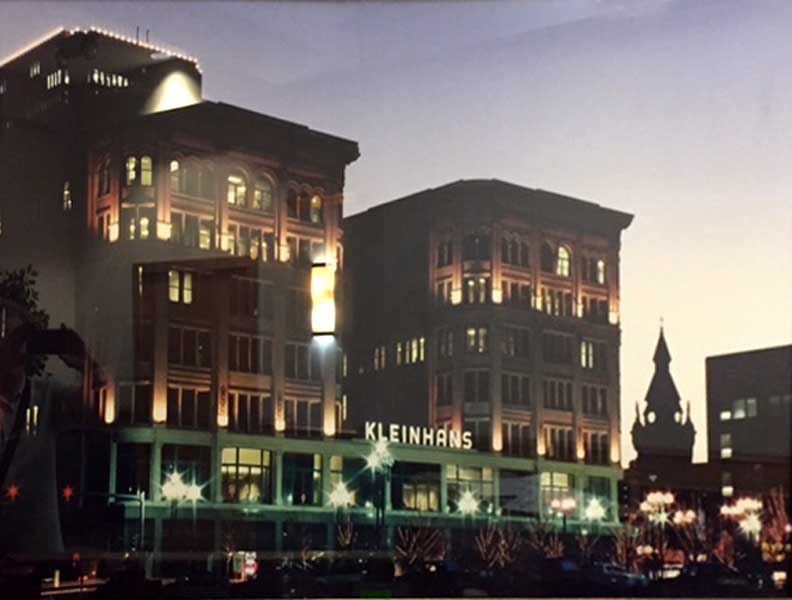
Kleinhans Men's Clothing Store in the Brisbane Building
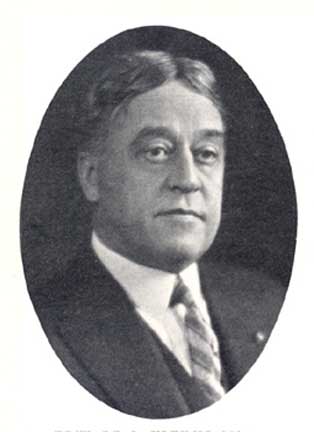
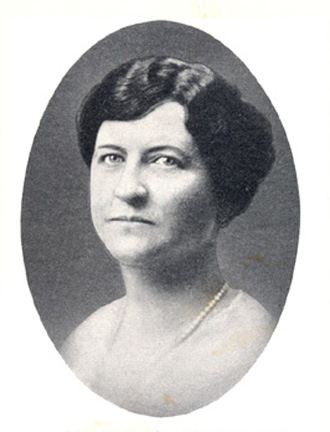
Edward Livingston Kleinhans ... Mary Seaton Kleinhans
Forest Lawn Cemetery ... Detail below:
Postcard
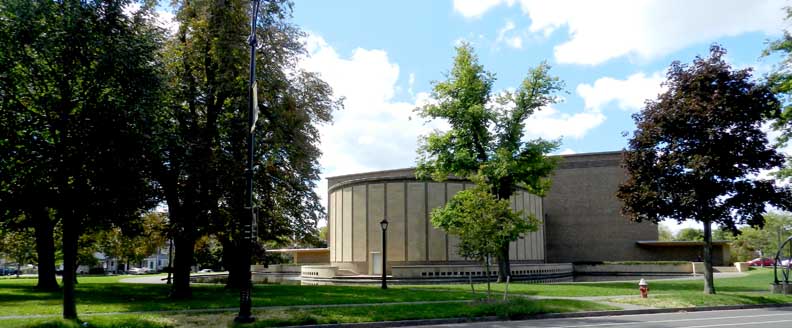
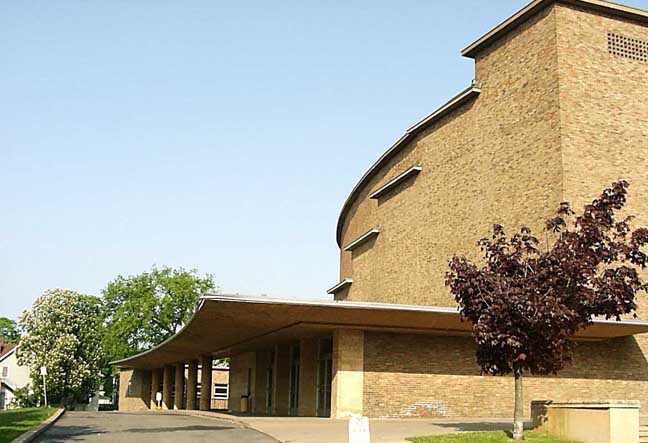
North Elevation
2012 photo
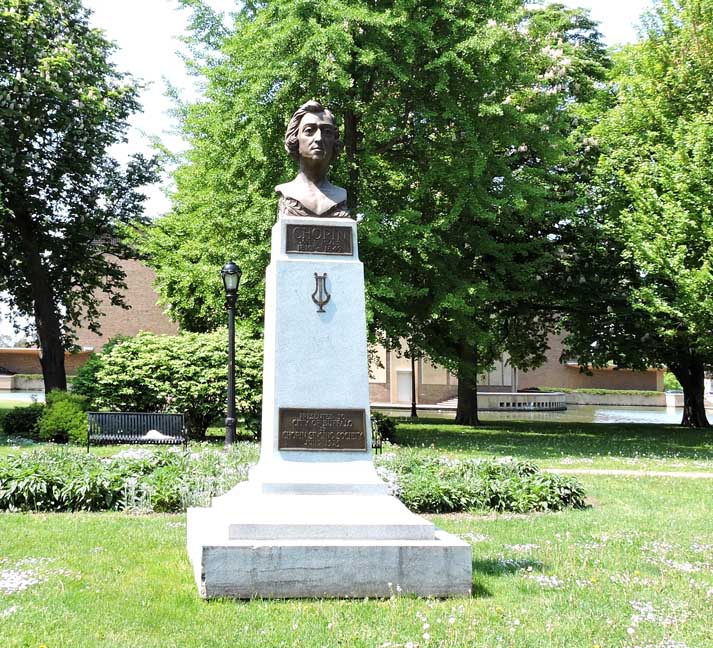
Frederick Chopin statue ... 2015 photo
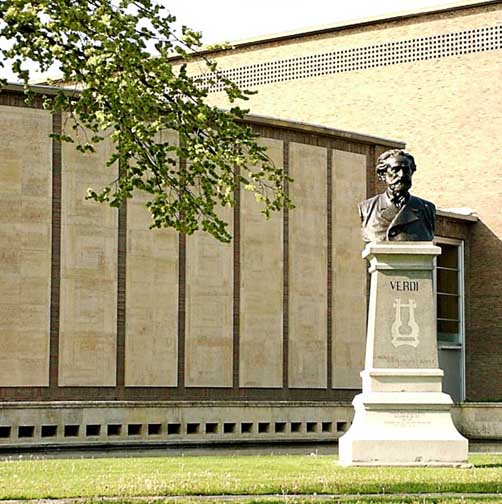
"Verdi" statue
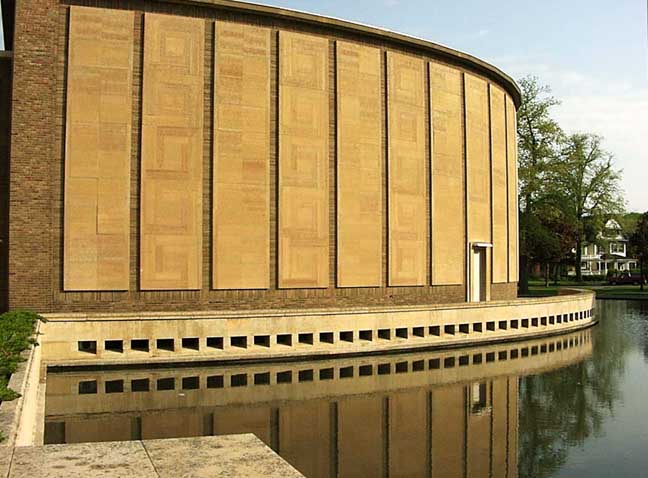
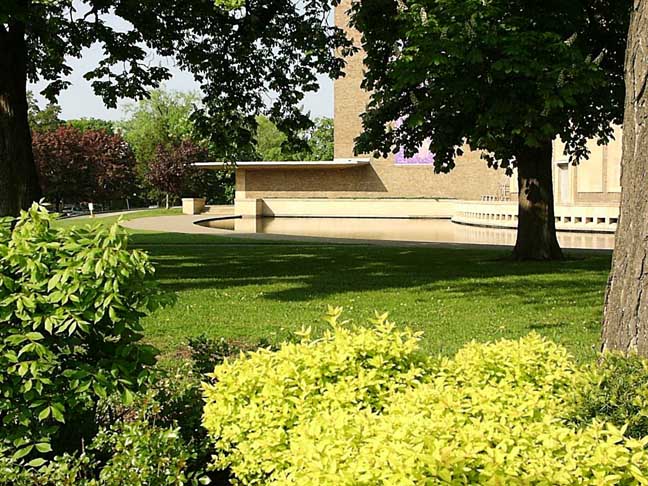
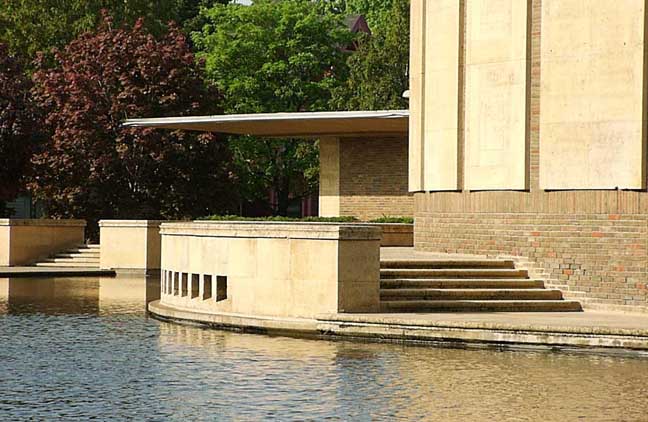
The reflecting pool - an important architectural feature - is only a couple of inches deep
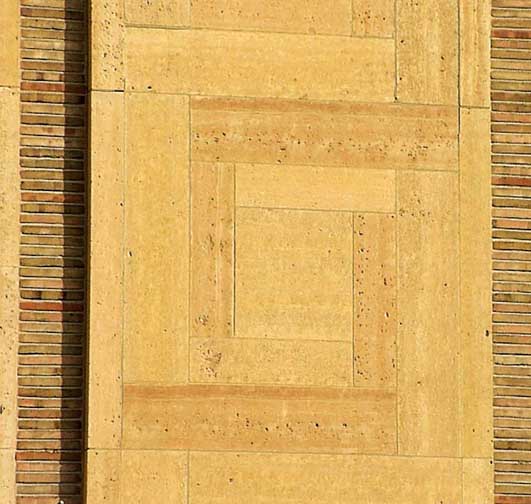
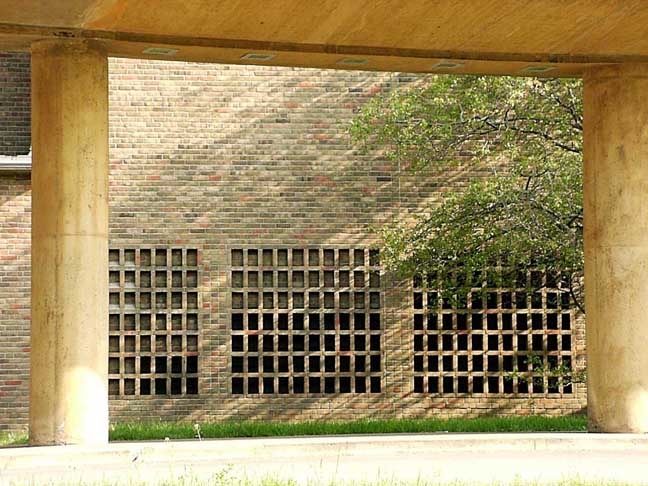
Texture is an important feature on this building
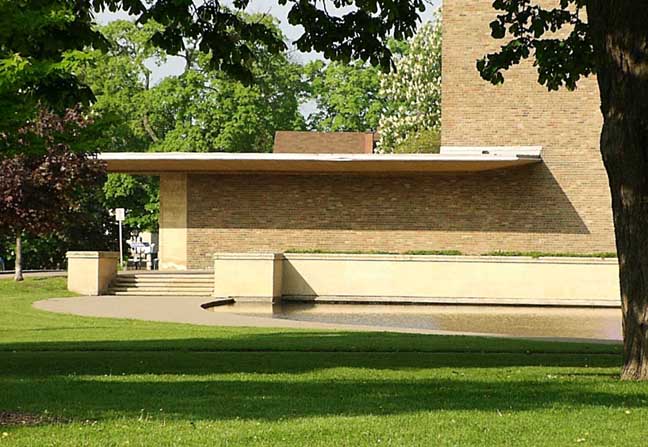
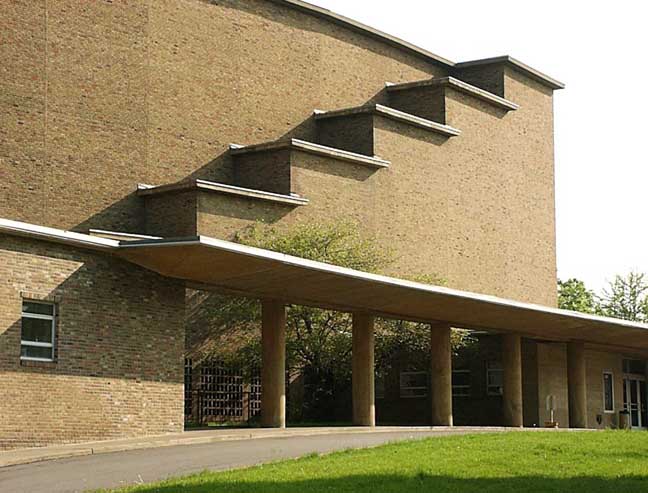
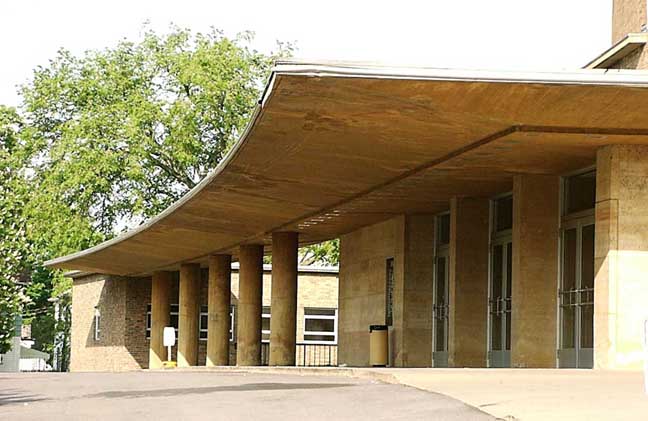
Cantilevered roof
West Elevation - Main Entrance
Musical scale?
Note steel reinforced concrete cantilevered roof
Edward Kleinhans and Mary Seaton
Kleinhans Music Hall
Edward L. Kleinhans was one of the founders (along with Horace Kleinhans) of the Kleinhans men's clothing store in 1893 which was located in the Brisbane Building.
In Louisville Edward met and married Mary Seaton, an accomplished pianist and vocalist. In 1901 they moved to Buffalo. They lived at various addresses, including Hotel Lenox (1898), Westbrook Apts., 900 Delaware Ave., and 44 Middlesex Rd. They had no children. Edward died Feb. 2, 1934; Mary died April, 1934. They left their entire estate (about $1 million) through the Buffalo Foundation to build a music hall which was completed in 1940.Kleinhans estate furnishings:
- Queen Anne style wing chair - Private collection
- C. 1930 Neoclassical style covered dish - Private collection
- C. 1930 covered container - Private collection
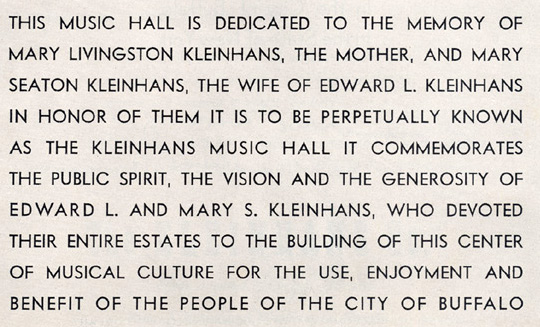
Named by Edward Kleinhans as a memorial to his wife, Mary Seaton Kleinhans, and his mother, Mary Livingston Kleinhans, the music hall was one of the first important American commissions on which Eliel Saarinen and his son Eero collaborated It was also one of the few such buildings erected during the Depression years. The project also received funds from the Works Progress Administration.
The Buffalo Philharmonic Orchestra has used the hall as its home since Kleinhans first opened.
The music hall was built between 1938-1940 and designed by the Finnish-American father-and-son team of Eliel and Eero Saarinen in the International style.
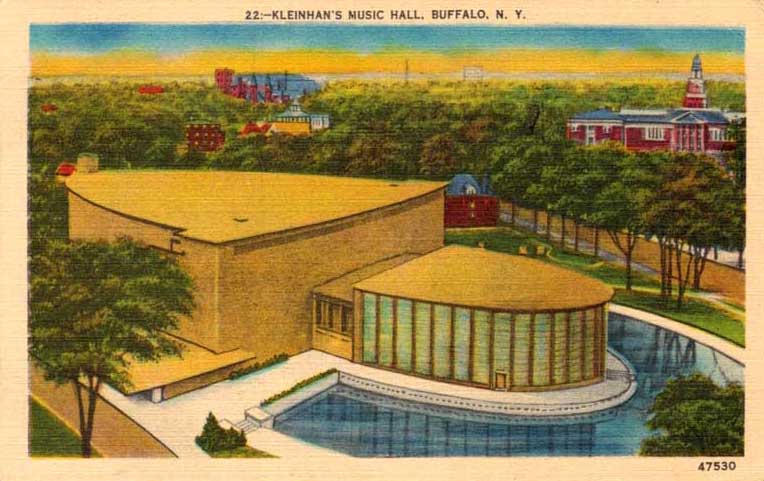
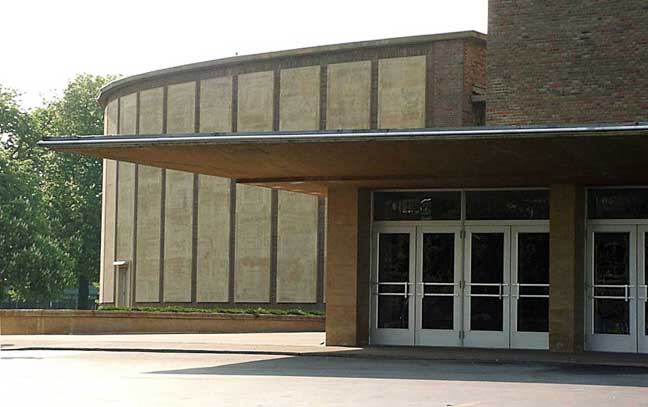
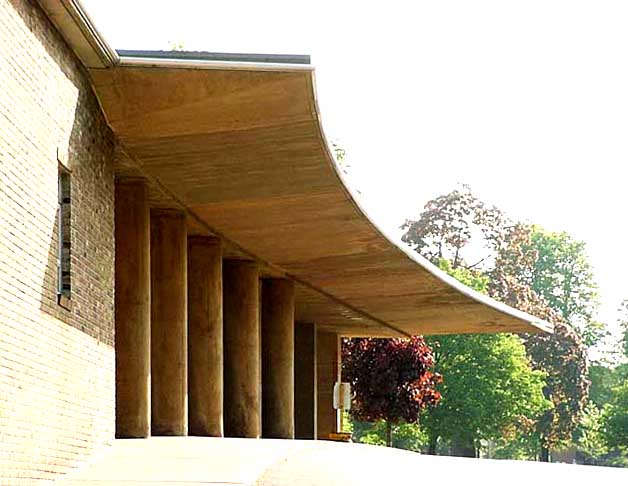
The predominant lines of the music hall both outside and inside are smoothly curvilinear and sweeping, suggesting not only the shape of a stringed musical instrument but the shape of music itself in its motion and flow. The design resembles the shape of a violin or cello with the two lobes of the instrument housing the larger and the smaller concert auditoriums in the building.
Thus, the shape of the structure suggests its function. A certain amount of contemporary architecture follows this practice Another example from Eero Saarinen's oeuvre is the TWA Building(1962) at Kennedy Airport, which resembles a bird's spreading wings.
The curving shapes of the exterior, which faithfully reflect interior volumes, look forward to Eero's later architecture, while the clean lines and careful craftsmanship, evident on the interior, hark back to the elder Saarinen's devotion to Arts and Crafts ideals.
The east end facing Symphony Circle is mirrored in reflecting pools.
Inside the music hall, the orphic form of the flaring, wood-paneled auditorium gives almost literal embodiment to Schelling's contention that architecture is frozen music. Although acoustically superb, the main performance hall is almost austerely plain, perhaps to keep the audience from being diverted from the music.
The Saarinens' concert hall quickly gained renown for its acoustical excellence and became a place of pilgrimage for architects and acoustical engineers from all over the world. Many post-World War II concert halls show its influence, notably, Festival Hall in London (1951).
Kleinhans Music Hall - Location
Kleinhans Music Hall is located on what is now known as Symphony Circle, but originally named The Circle by Buffalo park designers Frederick Law Olmsted and Calvert Vaux in 1868.
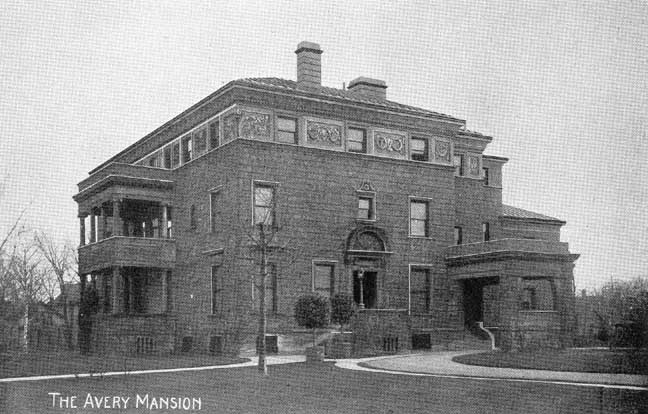
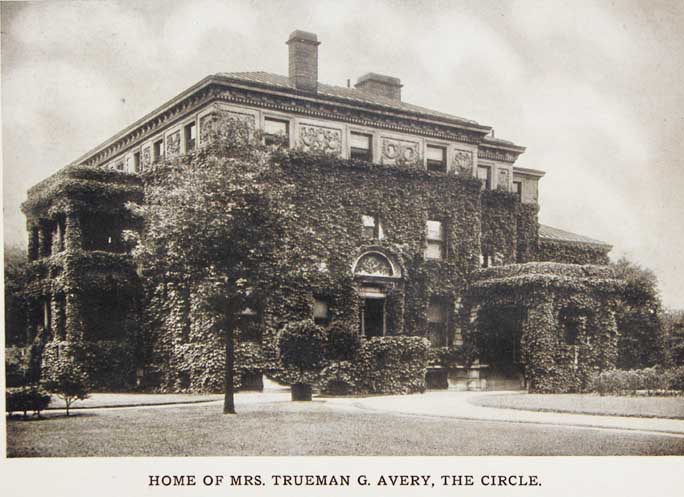
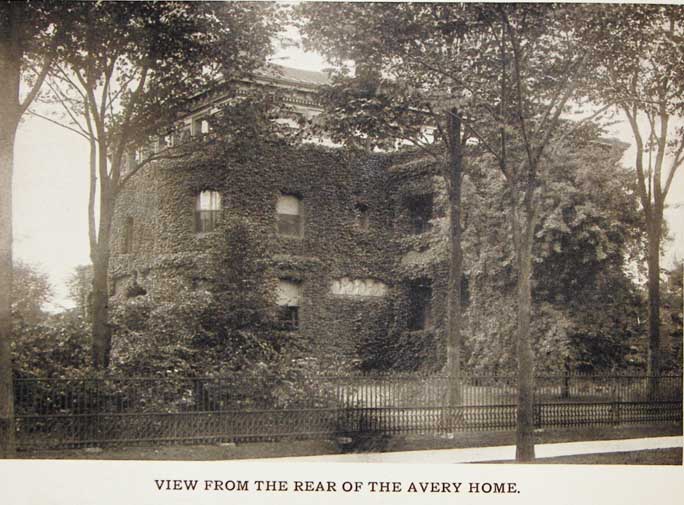
From the earliest days of the Circle this site was home to a greenhouse and some dwellings of modest size until the early 1890s. At that time, Truman Avery purchased all the grounds bordering this quadrant (3.5 acres) and built a palatial mansion.
In 1938, when the City of Buffalo was searching for a site for the new music hall to be erected as a memorial to retailer Edward L. Kleinhans' mother and wife, heirs to the estate of Mrs. Truman Avery offered the mansion to the City for a nominal sum.
The Circle was renamed Symphony Circle in 1958 because of its association with Kleinhans Music Hall and the Buffalo Philharmonic Orchestra.
Sources:
- Buffalo Architecture: A Guide," by Francis R. Kowsky, et. al. Cambridge: MIT Press, 1981
- "Music Hall Renowned for Design is Cited by U.S. Parks Service," by Phil Fairbanks, in The Buffalo News, April 23, 1989
- Dedication Program Book - 12 October 1940
- BPO Media Kit
- Kleinhans Community Association
- Designated Landmarks of the Niagara Frontier," by Austin M. Fox. Buffalo: Meyer Enterprises, P.O. Box 733, Ellicott Station, Buffalo, New York 14205. 1986.
Excerpts
Good Enough for Buffalo?
Why Does the Queen City Have No Great Examples of Modern Architecture?
The Answer Has Something to do With Courage
By Richard Huntington
The Buffalo News, September 25, 1988
[Jack Quinan, an associate professor of art history at UB and a Frank Lloyd Wright scholar] Quinan regards Eliel and Eero Saarinen's graceful hall as the last great piece of architecture in the city. "It was one of the few great American commissions in the '30s, outside of the Chrysler Building and Wright's Johnson Wax Building and Fallingwater. Saarinen had not done that much here. With this building, Buffalo did something daring."
The beauty and superb acoustics of Kleinhans are acknowledged worldwide, and its relationship to its site is masterful. Despite its radical shape, the hall isn't in the least obtrusive. It graciously gives ground to the more assertive First Presbyterian Church (Green and Wicks, 1889) across the way without relinquishing its own equilibrium and self-sufficiency. It is one of the city's great buildings.
The thought of the bulky monster that almost was built on the site is enough to make any architecture buff shudder. According to a research paper by Matthew Ginal, a student of Quinan's, the architects F.J. and W.A. Kidd had the commission in hand. They already had designed the Rand Building at Lafayette Square and had people with political clout behind them (the powerful George Rand, for one).
A surviving drawing of the Kidd design shows what a horror it would have been if it had been built. The Kidds were enthralled with a kind of Egyptian revivalist architecture that grew out of the art deco movement. The Kidd design for Kleinhans would have been a forbidding edifice with massive pilasters set along the front, a realistic sculpture portrait of a great composer mounted atop each. The building's inert, round-cornedbulk would have had little to say to the curving site and even less to the slender tower of First Presbyterian.
Still, it probably was considered by many to be a good design by the standards of the day. But fortunately there was one person with vision who didn't think so: Esther L. Link (now Mrs. Esther L. Emig), who served from 1938 to 1940 as Kleinhans' first acting director. When she first saw the Kidd-designed drawing in early summer 1938 and was asked her opinion, she said: "You really want to know? I think it's a disaster." From there on the battle lines were drawn, until some six months later, after fierce infighting, the design was awarded to the Saarinens by a close vote.