![]()
Temple Beth Zion -Table
of Contents
|
Temple Beth Zion - History
Temple Beth Zion - OFFICIAL HOME PAGE
|
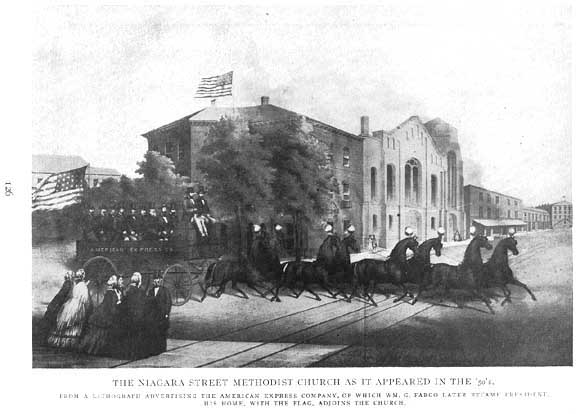
Universalist Church of Our Father was rededicated Temple Beth Zion in 1865 |
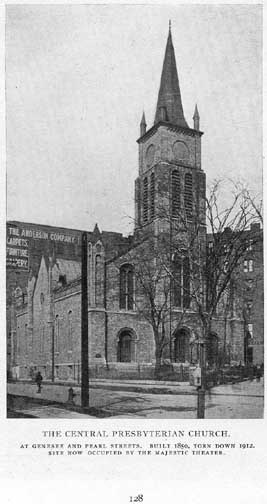
Central Presbyterian Church was used by the congregation from 1886 to 1890 |
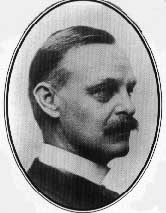
Edward Kent, architect of Temple Beth Zion, 599 Delaware Ave. |
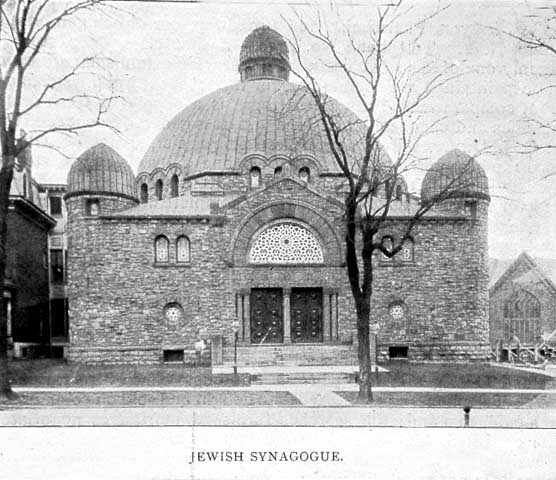
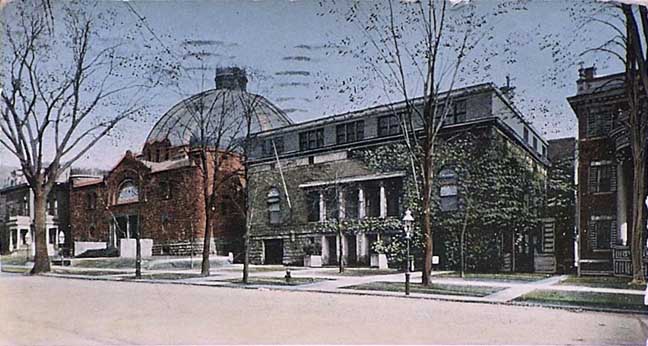
Temple Beth Zion, 599 Delaware Ave. (destroyed) |
|
Temple Beth Zion, 599 Delaware Ave. (destroyed) |
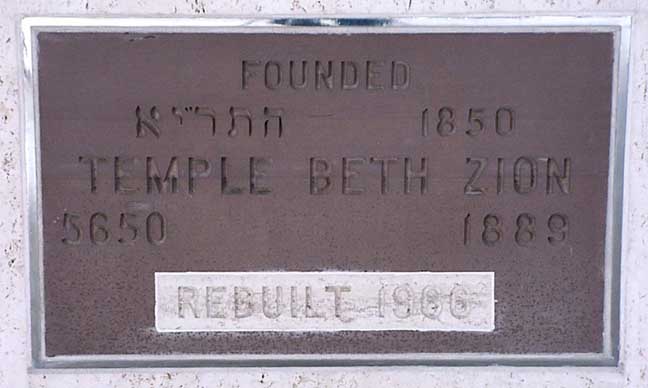
Temple Beth Zion, 805 Delaware Ave., plaque. |
Temple Beth Zion, 805 Delaware Ave., cornerstone substitute |
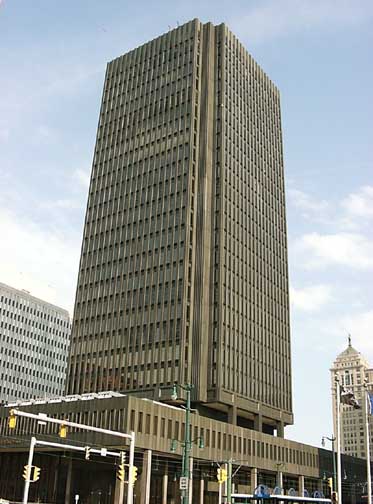
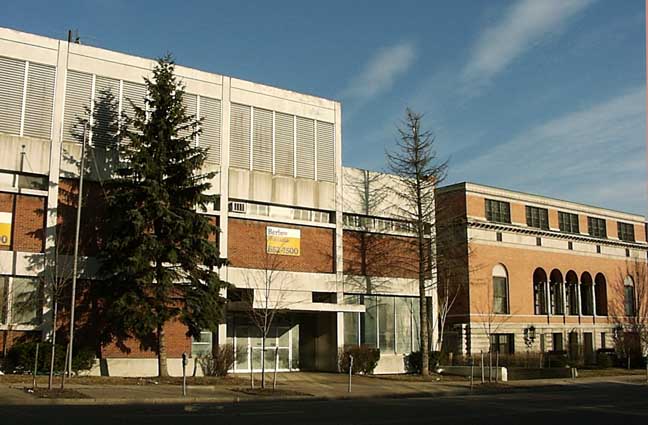
Harrison and Abramovitz-designed Erie Saving Bank/Main Place Mall Tower |
Polish Jews founded the first congregation in Buffalo, Beth El Synagogue, on Pearl Street, in 1848. Nearly all the Polish families settling here before 1865 were Jewish; they came from the Russian part of partitioned Poland.
Immigrant Jews from Germany settled along North, Franklin and Tupper Streets. They were part of the Beth El Synagogue. Unhappy with the use of the Polish liturgy in its services and the strict Orthodox nature of the congregation at Temple Beth-El, eleven German Jews seceded to establish a congregation concurrent with the German liturgy. Under the direction of Rev. Slatkey, formerly with Temple Beth-El, the group began holding meetings in the parlor of the home of Mr. Sinzheimer at 55 Oak Street.
The Hebrew for "synagogue" is not "beth ha-tefilah, house of prayer," as might be expected; rather, it is "beth ha-knesset, house of assembly," demonstrating that wherever Jews live, the synagogue lies at the very center of communal life.
Between its founding in 1850 and the year 1863, the well being of the congregation stood on somewhat shaky ground.
In 1863, a new "Reform" movement began to sweep the Jewish faith. Curious about this movement, members of the congregation requested Rev. Wise of Cincinnati to send a minister to educate them on it. These members rented space in the Kremlin Block on the southeast corner of Main and Eagle Streets and on 7 September, 1963, with twenty-two people gathered, heard of the new liberal ideologies in the Jewish faith. For the following year, there was little action by any of those that had heard the talk. On 9 October, 1864, the group once again gathered at the Kremlin and this time reorganized as the first Reform Jewish congregation in the city. Within one week, membership had grown to forty-six people. As a result of this action, there now were two Beth Zion congregations in the city. The original body of members, no longer certain of its direction, soon after merged with the Reform congregation.
The First Temple
Seeking a larger space in which to meet, the group purchased the former Niagara Street Methodist Church (destroyed) on the north side of Niagara Street just below Eagle from William Fargo for $13,000. After a period of extensive renovation to the building, on 25 May, 1865, they rededicated the building as Temple Beth Zion at a service at which both Rabbi Isaac N. Cohen and Rabbi Isaac M. Wise, the leader of the Reform Movement spoke. Foreshadowing the dual language interplay that has remained a hallmark of Reform Judaism, Rabbi Cohen's sermon was in German, while Rabbi Wise addressed the congregation in English.
In 1886, the congregation sold the building to the Masons for the site of a Masonic Temple and for the next four years, they were a congregation without a building. While looking for a new site on which to construct a house of worship, they met in the Universalist Church of Our Father on North and Mariner (destroyed) and the Central Presbyterian Church,then on Genesee and Pearl (destroyed).
Temple Beth Zion, 599 Delaware Avenue
In May of 1899, the congregation purchased the former Cushman Estate at 599 Delaware (next to the present Twentieth Century Club building which was built in 1896) and immediately began to construct a magnificent Byzantine Temple designed by Edward A. and William Kent. On 12 September, 1890, they dedicated their $95.000 house of worship. Constructed of Medina Sandstone, an immense copper dome marked the highly distinguished building. There was also beautiful interior frescoing, It was at this location that the congregation flourished, experiencing its greatest increase in membership.
Tragedy struck on 4 October, 1961, when a fire, fueled by flammable liquids being used to refinish the pews, destroyed the building. Within forty minutes of its discovery, the fire destroyed the magnificent central dome, causing it to collapse into the building. With the building a total loss, the congregation, after seventy years there, was once again without a house of worship.
During planning and construction of the present building, they held services at Westminster Presbyterian Church, Temple Beth El, the Jewish Center of Buffalo, Town Club, and for the High Holy Days, Kleinhans Music Hall.
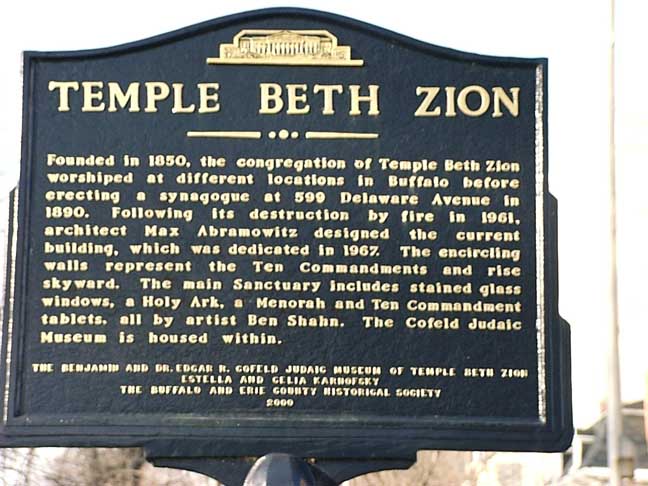
Temple Beth Zion, 805 Delaware AvenueOn 21 June, 1964, Rabbi Joseph L. Fink, accompanied by the architect, Max Abramovitz (of the firm Harrison and Abramovitz, who planned both the United Nations Headquarters and the Lincoln Center for the Performing Arts in New York) broke ground for the new house of worship. Almost three years later, on 15 April, 1967, the completed building was dedicated.
The building is perhaps the most striking place of worship in the city. Curved sheets of Alabama limestone, its soaring ten scalloped walls (cupped hands) are symbolic of the Ten commandments. They pitch outward as a representation of man's arms, outstretched in prayer.
The interior of the building continues the striking appearance of the exterior. The walls are bathed in a diffused natural light resulting from the skylights ringing the perimeter of the building.
The 1,100 seat auditorium, designed by Abramovitz, focuses upon two thirty-foot-high Commandment Tablets flanking the highly noted east wall window. Ben Shahn's design features the first letter of each commandment in mosaic, followed by the rest of the text in gold leaf.
Created by artist Ben Shahn, the east window behind the ark tells the story of the Lord speaking to Job through a whirlwind. The Henry Lee Willett Studios of Philadelphia, Pennsylvania, executed the forty-foot-tall window.
The west stained-glass window, also created by Shahn, represents the 150th Psalm.
Shahn also designed the menorah of brass and clear glass.
The 48 rank, 4,000 pipe organ features trumpets from the Lafayette Theater organ. The organ was built by the Casavant Freres Company.
The Cofeld Judaic Museum is housed behind the synagogue.
Being constructed in the round, the building does not contain a cornerstone. Instead, the original cornerstone from the building at 599 Delaware is placed in the rear wall of the sanctuary ark. To it has been added the phrase "Rebuilt 1966."
Temple Beth Zion is one of the oldest and largest Reform congregations in the nation. At more than 1,200 families, Temple Beth Zion remains by far the largest Jewish Congregation in Western New York.
|
Most important buildings by Max Abramovitz:
|

Sources:
See also:
- Jewish-American History in Buffalo
- Ben Shahn (1898-1962: Timeline
- Ben Shahn (1898-1962: Common Man, Mythic Vision: The Paintings of Ben Shahn
- Eli David Hofeller Biography