St. Joseph's Cathedral - Table of Contents
St. Joseph's Cathedral - Table of Contents
Nave - St. Joseph RC Cathedral
AKA St. Joseph's RC Old Cathedral
50 Franklin St., Buffalo, NY
|
St.
Joseph RC Cathedral - Official Website |
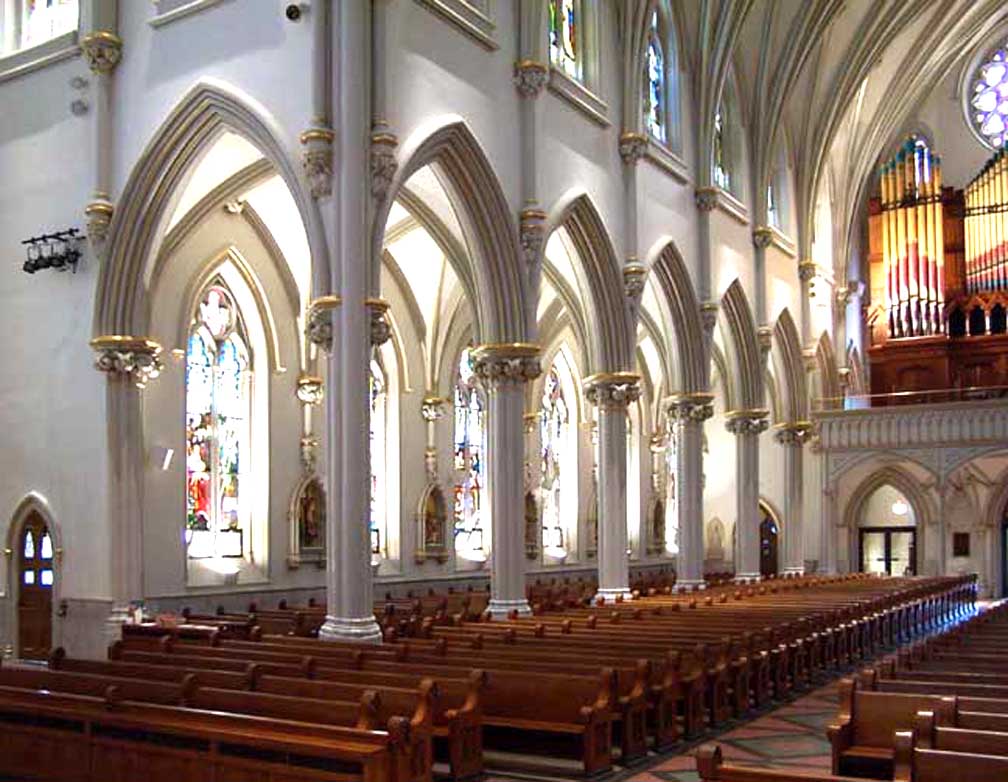 Gothic
Revival arcaded columns
separate the center aisle from the side aisles 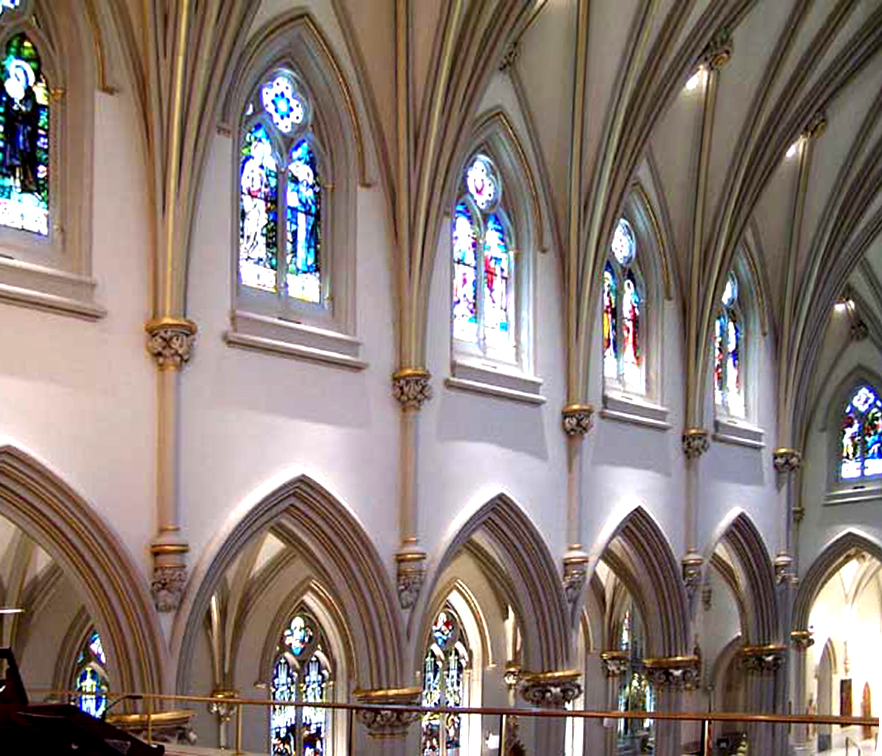 Ribbed vaulting with decorative corbels Clerestory windows The windows in the right clerestory mirror the pairing of saints, and prophets on the left side. Gothic Revival arcaded columns separate the nave from the side aisles 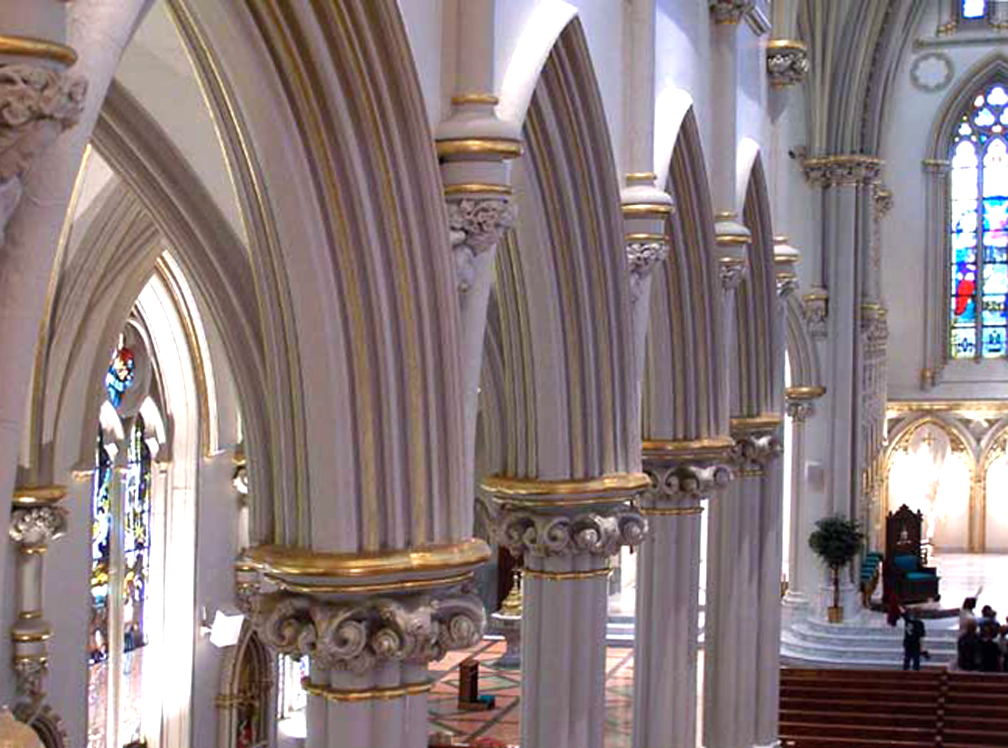 Gothic Revival arcaded columns separate the nave from the side aisles 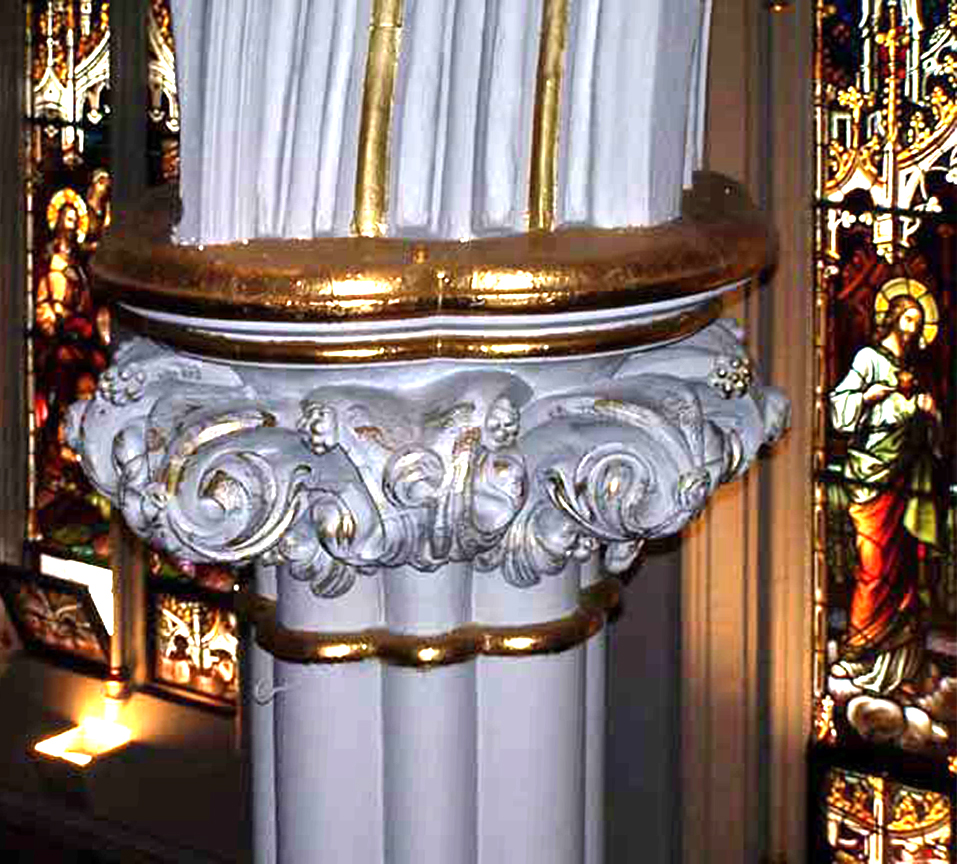 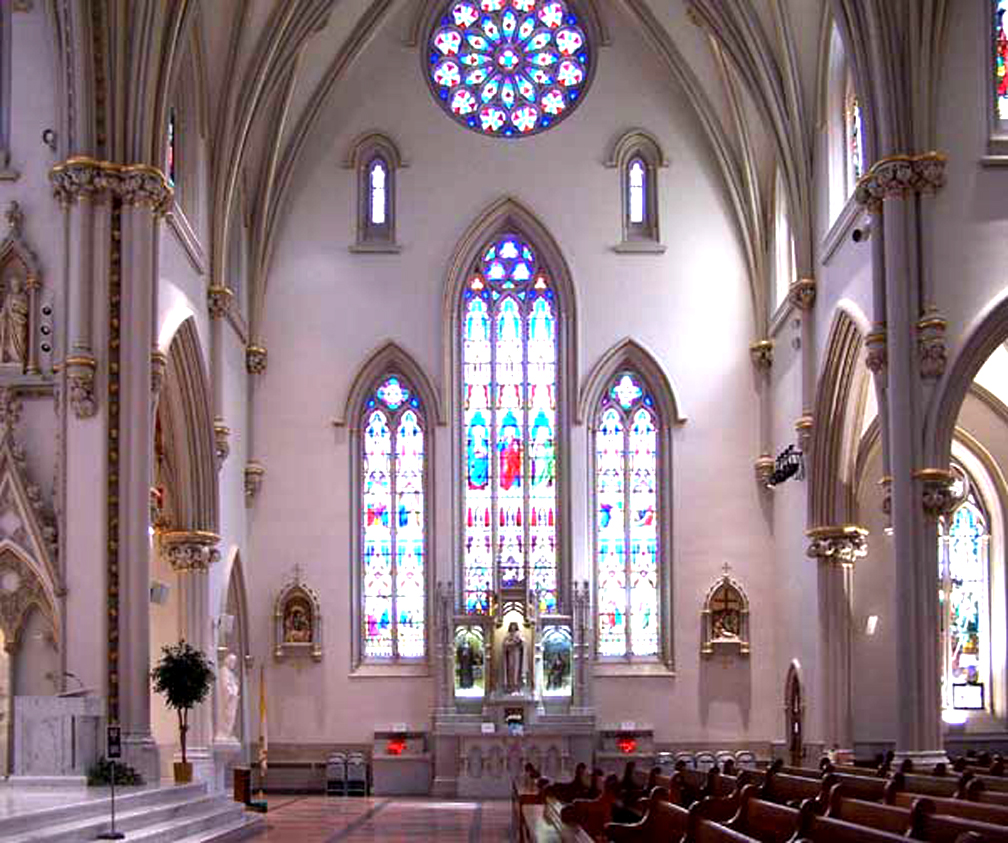 South transept (note the sanctury at far left and nave at far right) 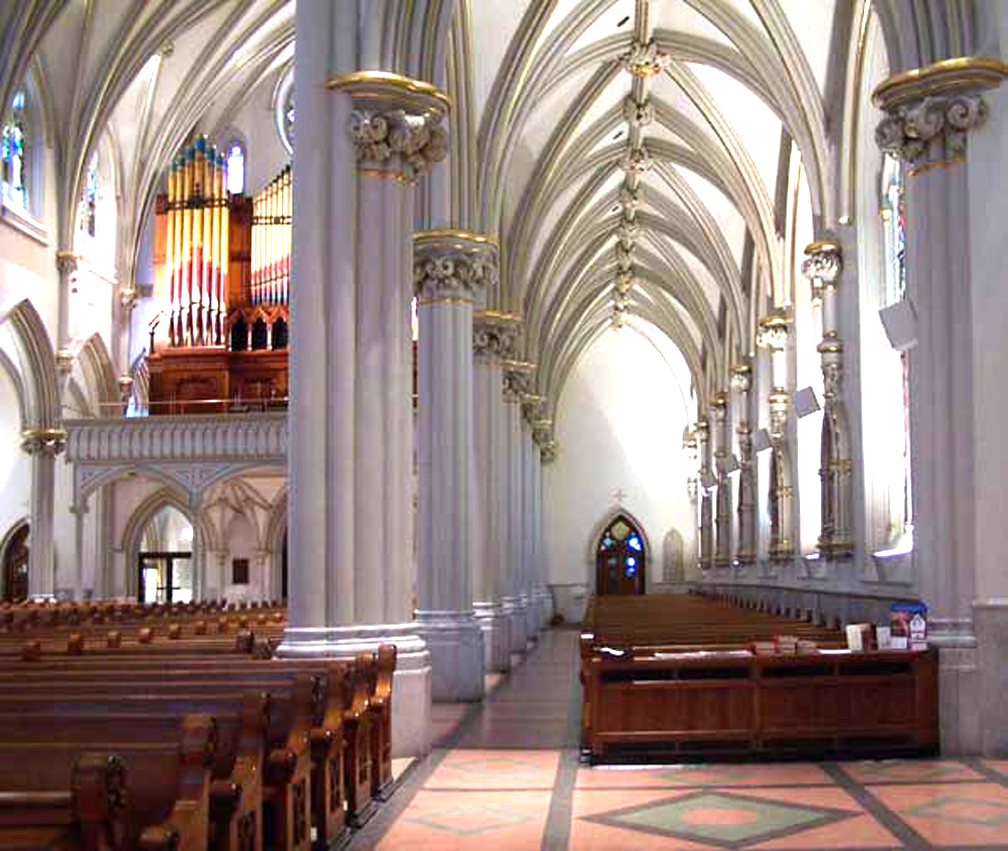 Side aisle (at right) separated from the nave by Gothic Revival arcaded columns
|
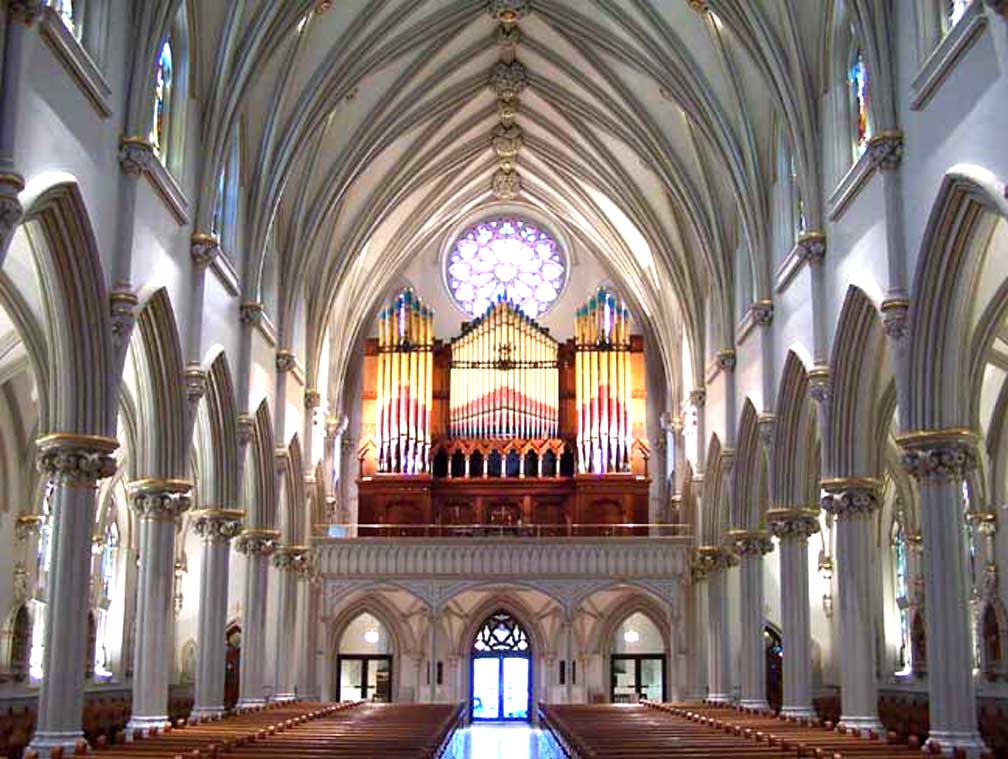 Nave Front entrance (portal) is visible at bottom. Gothic Revival arcaded columns separate the nave from the side aisles. Rose window Centennial Organ, built by L. & G. G. Hook and Hastings in 1876 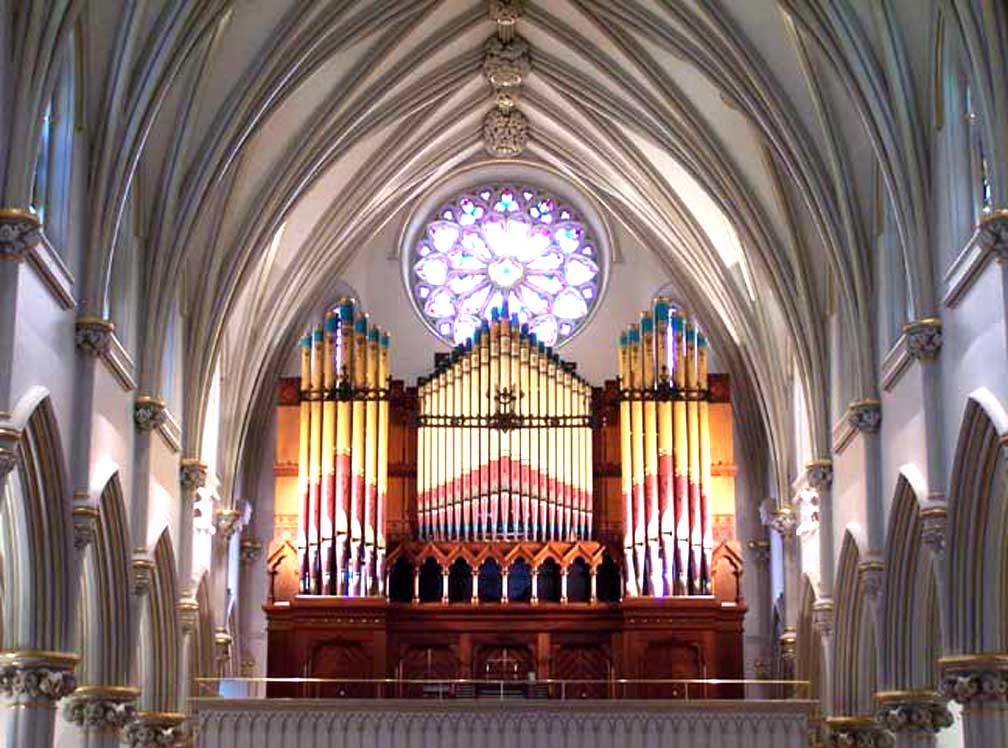 Ribbed
vaulting with
decorative bosses
Centennial Organ, built by L.
& G. G. Hook and Hastings in 1876
Corbel
table 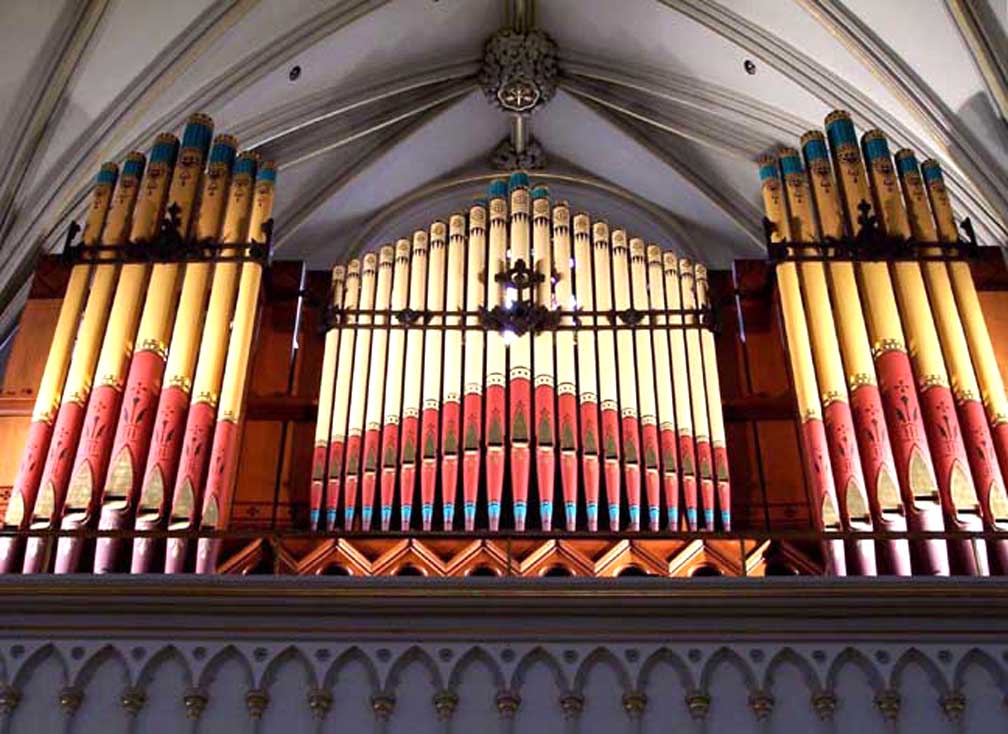 Ribbed
vaulting with
decorative bosses
Centennial Organ, built by L.
& G. G. Hook and Hastings in 1876
Corbel
table 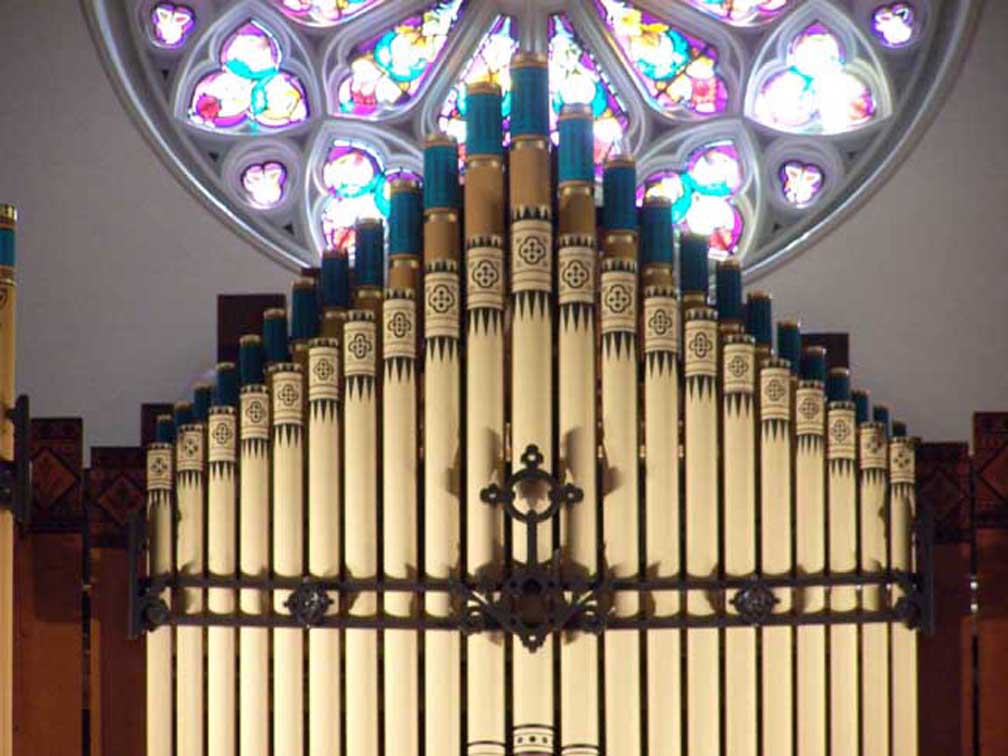 
The front
metal pipes
display authentic period colors taken from the rose window
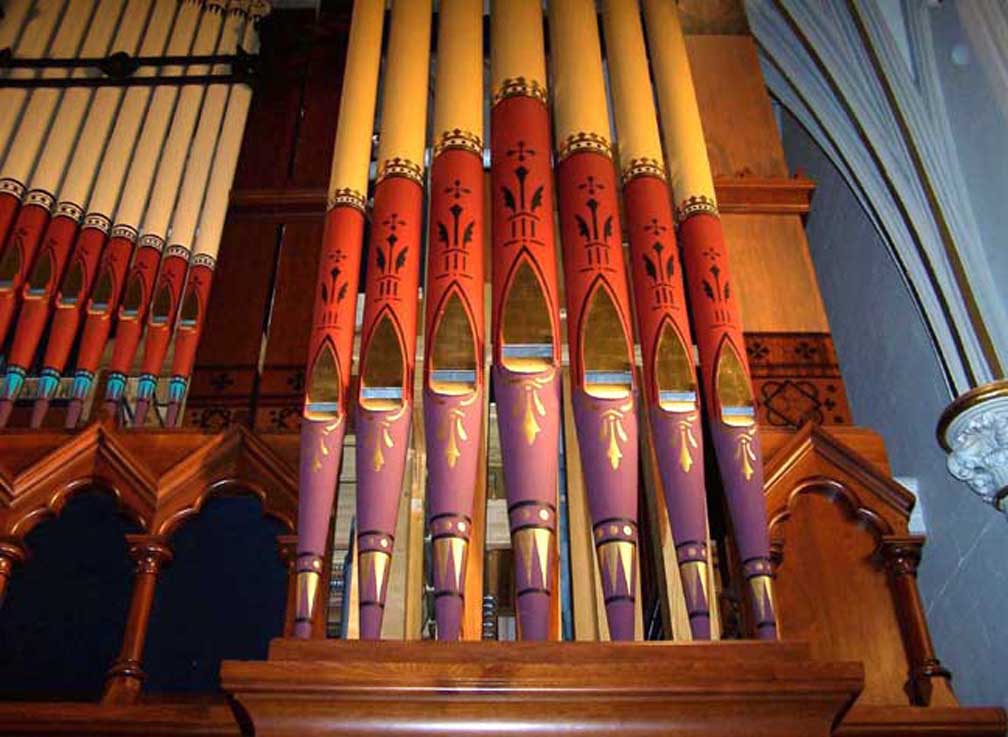 The unique patterns on the wooden pipes are found only on Hook and Hastings instruments |
Definition
of nave:
the central aisle; the
part of a church located between the chief entrance and the
chancel/sanctuary,
and separated from the side aisles by piers or columns Marking
the church's Golden
jubilee in 1905, donors purchased beautiful stained-glass
windows to replace
those of plain glass, selecting subjects of their own choosing
for each
window's theme. At
the same time, the original
wooden floors of the cathedral, which were beginning to
deteriorate, were
replaced with more durable and beautiful polished marble and
tile. Centennial
Organ The
choir loft houses the historic Centennial
Organ, built by L. & G. G. Hook and Hastings in 1876 for
the Centennial
Exhibition in Philadelphia, where it won first prize as the
finest example of
American organ-building. Bishop Ryan purchased the instrument
at the close of
the exhibition, and the organ was installed in the cathedral
in 1877. Other
than its electrification in 1925, the organ remained
relatively unchanged until
1998, when the Andover Organ Company in Methuen,
Massachusetts, began a
comprehensive three-year restoration and expansion project.
All the original
components were restored to "like-new" condition, while the
organ's
historic tonal palette was retained. With 72 independent stops
creating 92
ranks from more than 5,300 pipes, the organ is now equipped to
produce music
for the renewed liturgical rites. |