John J. Albright - Table of Contents
John
J.
Albright Illustrated Biography
1848-1931
TEXT Beneath Illustrations
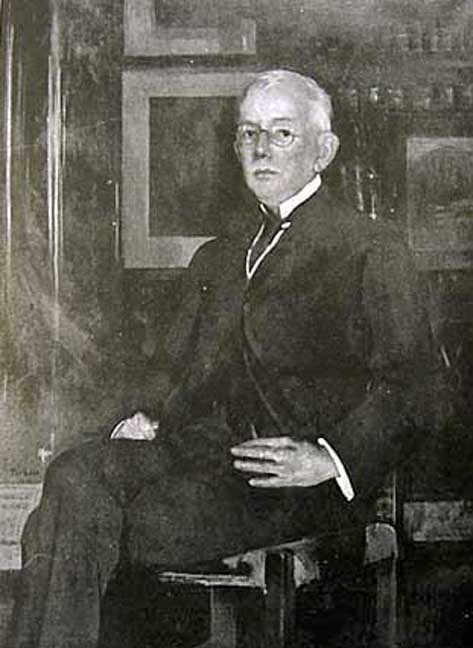
John J. Albright.
Source: Photo of copy hanging in Buffalo & Erie County Historical Society Museum
The original portrait, by E. C. Tarbell, is part of the collection of the Buffalo Club at 388 Delaware Ave.
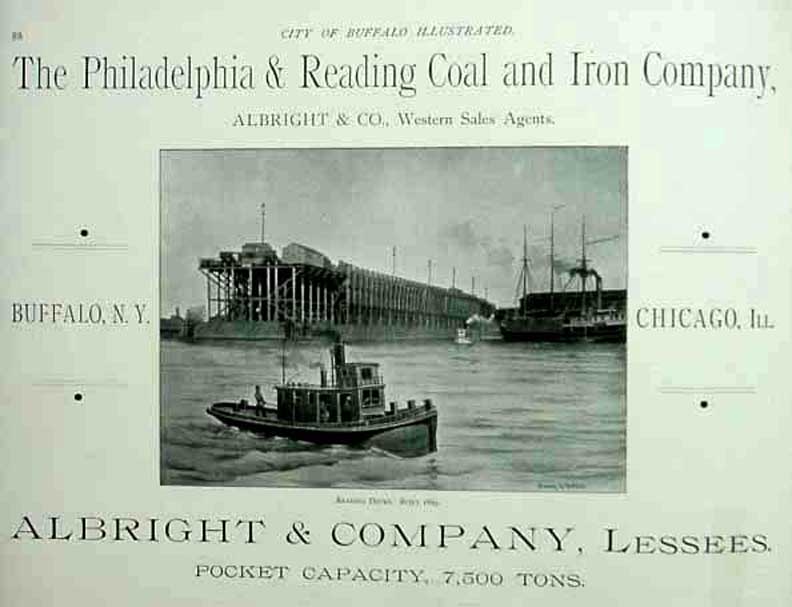
Ad
Source: "Buffalo Illustrated: Commerce, Trade and Industries of Buffalo." Buffalo: The Courier Printing Company, 1890.
Caption: Residence built 1855. Now 730 West ferry Street.
Former home of Charles Wadsworth, James Adams, (who built the tower), Jesse C. Dann and John J. Albright. Burned 1901, and replaced by Mr. John J. Abright's present residence.
Source: "The Picture Book of Earlier Buffalo," Severance, Frank H., ed. Buffalo Historical Society Publications, Vol. 16, 1912
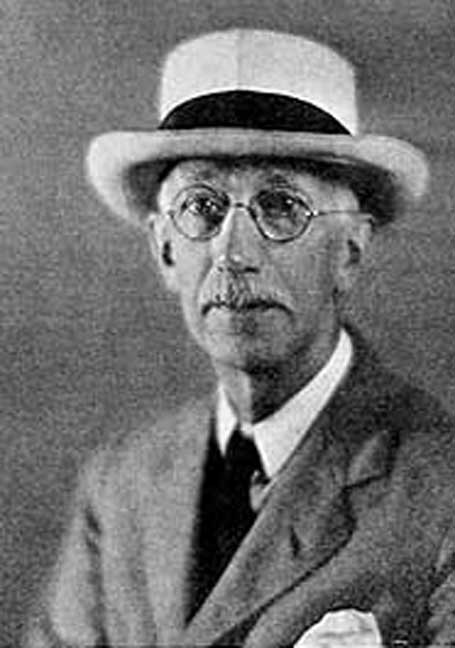
E. B. Green
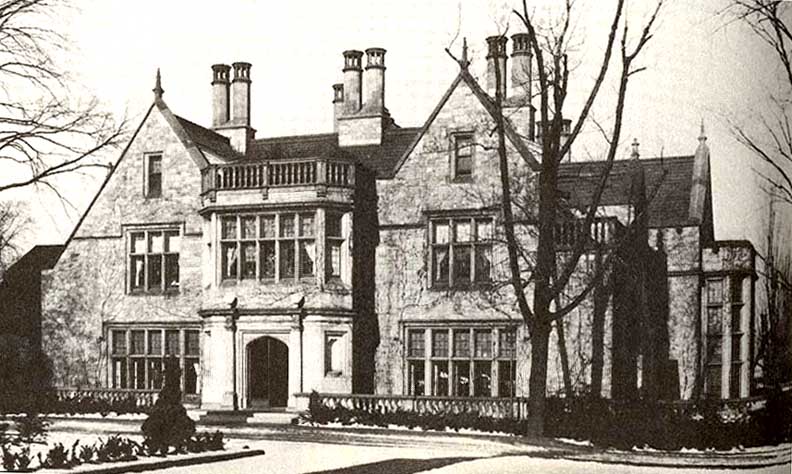
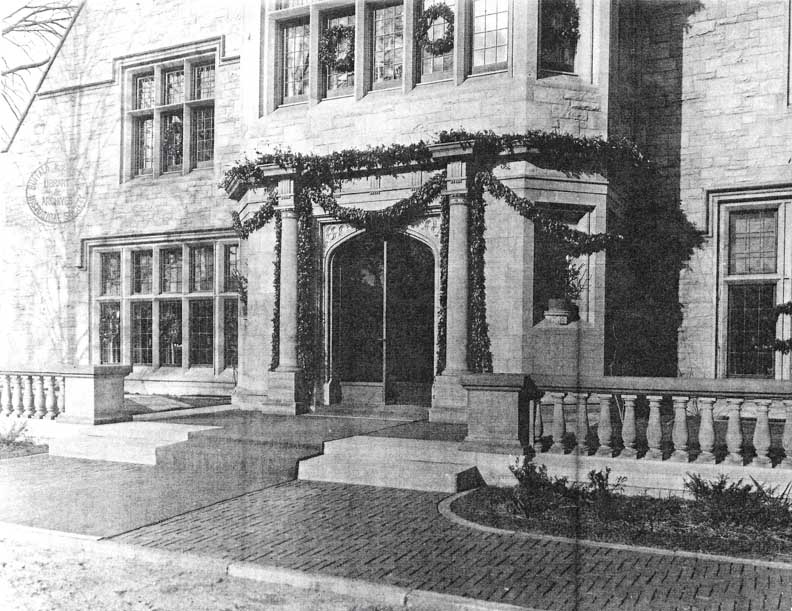
The 1900-1935 Tudor style Albright mansion on West Ferry designed by Albright's close friend E. B. Green. (Entrance detail below:)
Entrance
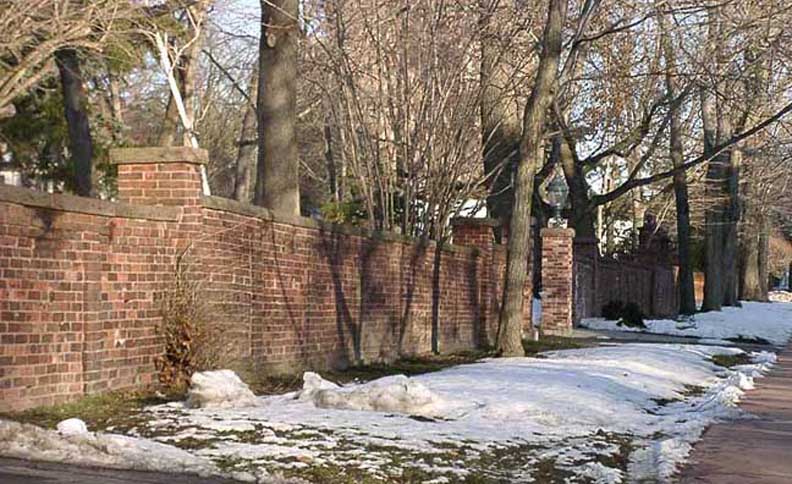
2010 photo Remaining wall of the Albright Estate on W. Ferry Street
2010 photo Remaining wall of the Albright Estate on W. Ferry Street
2010 photo Remaining wall of the Albright Estate on W. Ferry Street
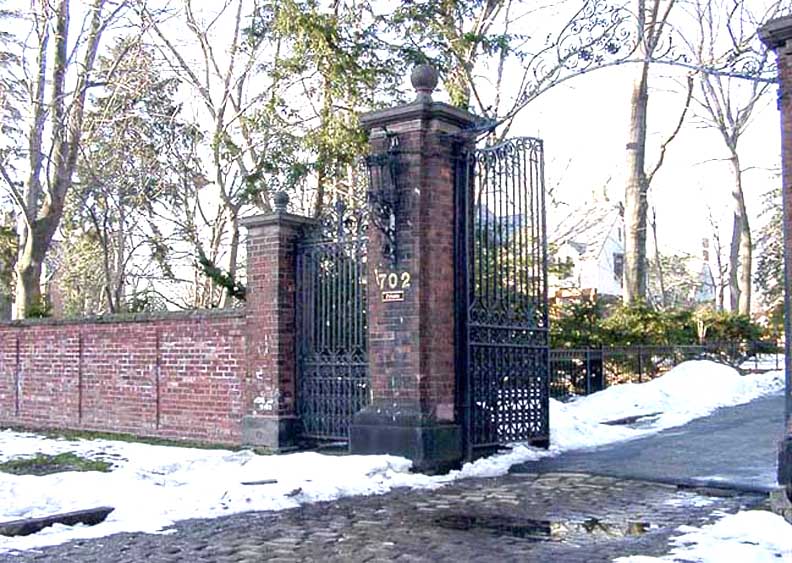
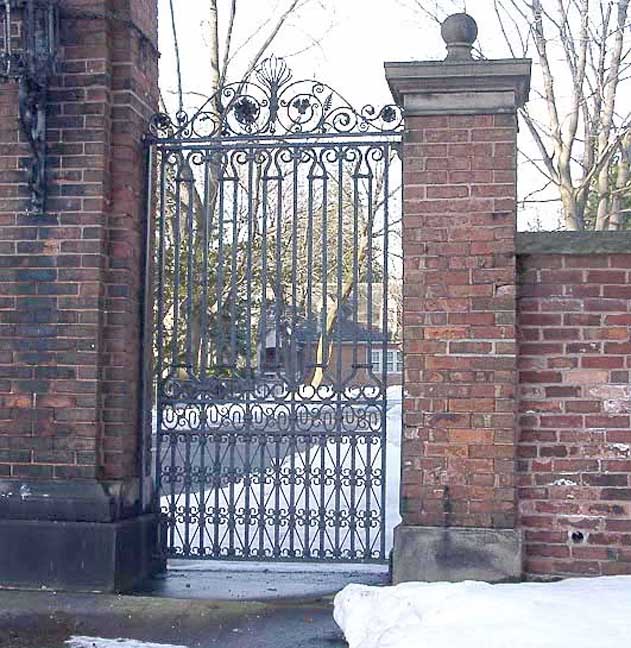
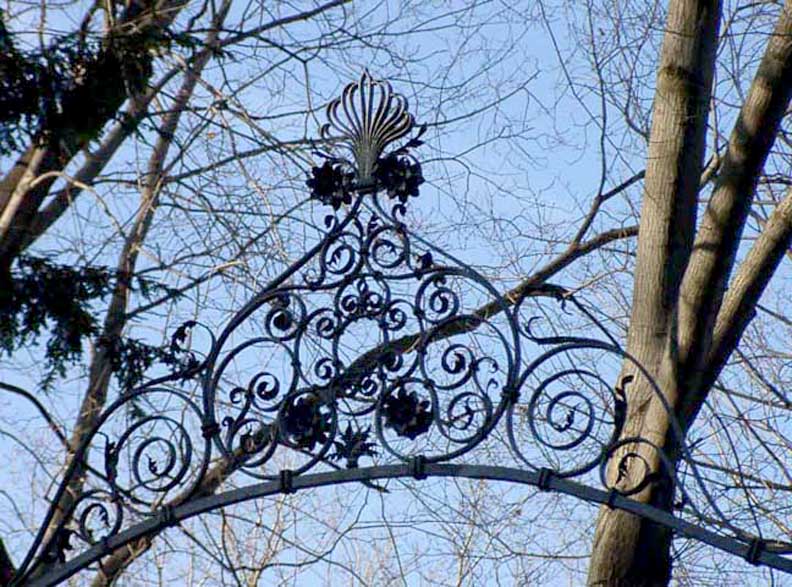
2010 photo Remaining gate of the Albright Estate on W. Ferry Street Crowning anthemion C scrolls
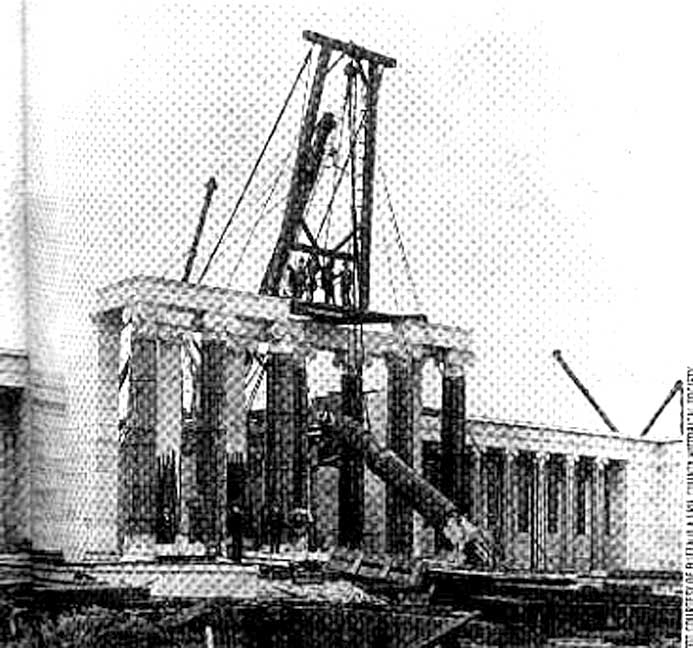
Albright Art Gallery construction photo
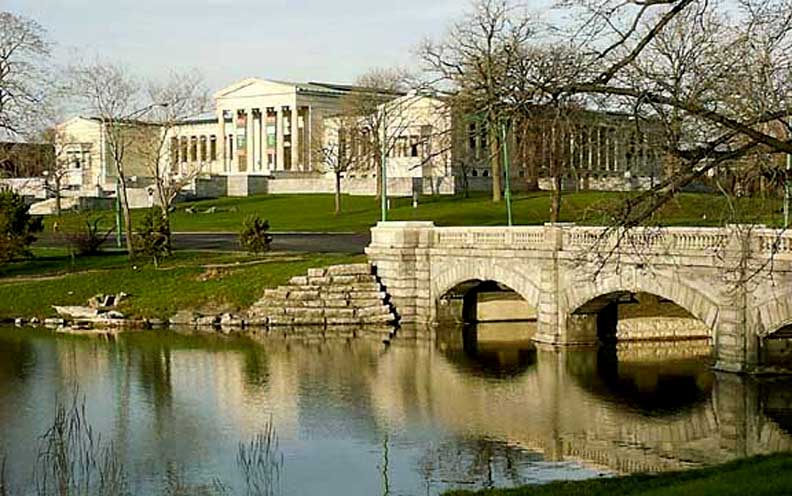
Albright-Knox Art Gallery with 1901 Bridge of the Three Americas in foreground
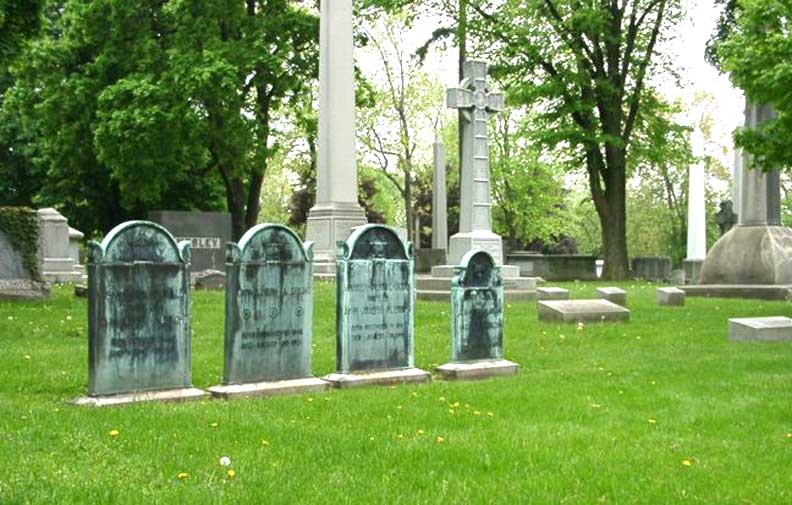
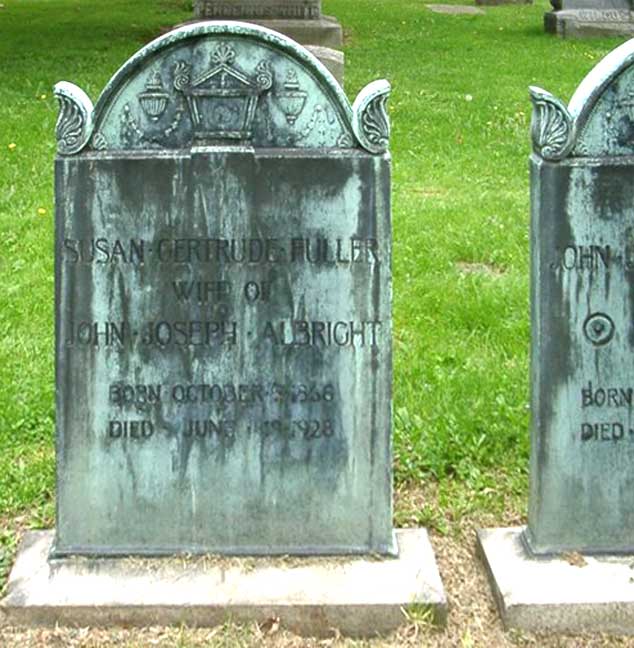
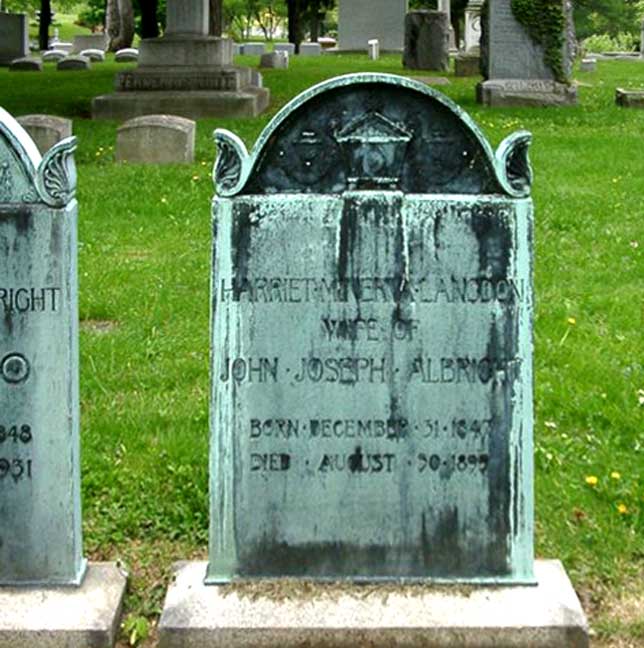
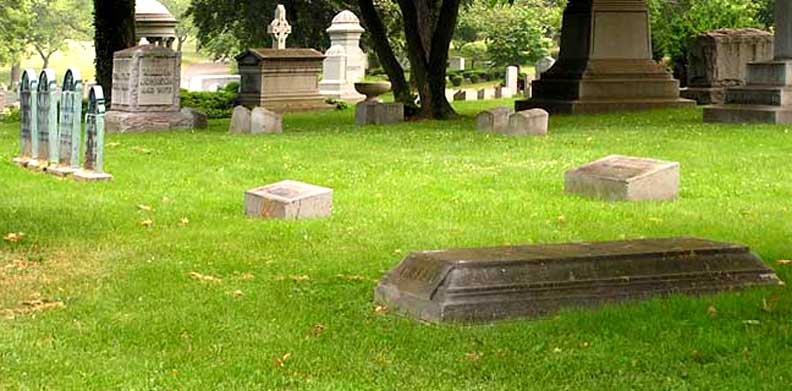
Four copper Albright memorials in Forest Lawn Cemetery, Section H.
Note large flat memorial on far right which is the E.B. Green memorial in the Albright lot.
- "Susan Fuller Albright
- Date of Death 6/19/1928
- Second wife of John J. Albright.
- Mrs. Albright was born in Lancaster, PA and was a graduate of Smith College.
- After the death of Mr. Albright's first wife, Harriet, Miss Fuller tutored the three Albright children, Raymond, Langon & Ruth.
- Susan married John J Albright on 3/23/1897, and together they had five children, Jack, Betty, Fuller, Susan & Nancy.
- Mrs. Albright was a Member of the Board of Women Managers' Entertainment & Ceremony sub-committee and the Committee on Fine Arts for the Pan American Exposition held in Buffalo in 1901."
- Source: Patrick Kavanagh
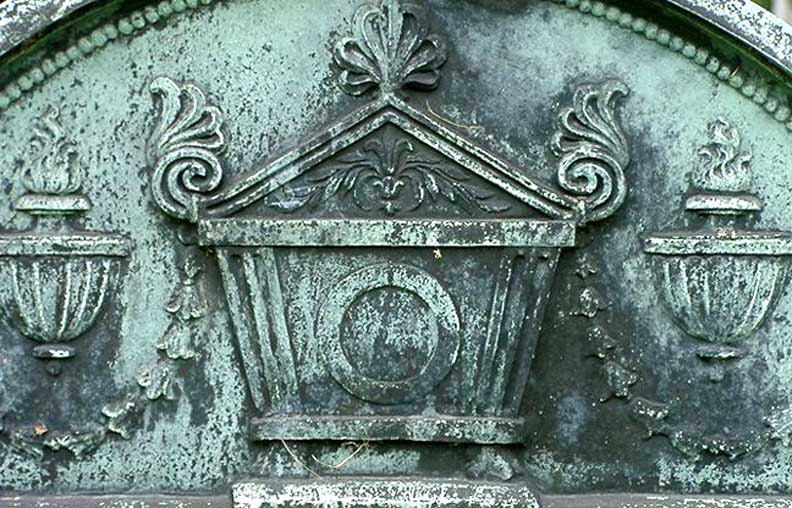
Detail on Albright's copper memorial: Urn and flame Sarcophagus with anthemia and bellflowers
Harriet Langdon Albright (John's first wife) Date of Death: 8/30/1895
E. B. Green tomb stone at the right in the Albright lot
John J. Albright
Excerpts from
The Ivy Grows Again: A History of the Albright Estate from 1890 to the Present
By Betsy Taylor
Published by Nardin Academy in 1998Born on January 18, 1848 in Buchanan, Virginia, [John J. Albright's] parents were both from Pennsylvania. When he was a child, his family lived in Scranton, where he attended public schools in his youth. Albright then studied at Williston Academy in Massachusetts. Following graduation form the Rensselaer Polytechnic Institute in Troy, N.Y., he returned to Scranton in 1868 where he supervised coal operations
At that time, coal was in high demand in the western United States, and Albright got involved in railroad shipping, sending coal out West and filling up the empty train with grain to haul back to the East. In his first year of freight shipping, Albright turned a profit of $100,000.
By 1871, Albright was working out of Harrisburg, Pennsylvania selling coal wholesale, along with a business partner, a man by the name of Andrew Langdon. He married Langdon's sister Harriet during the next year, and by 1873 they had moved to Washington, D.C., where Albright and Andrew Langdon started to work for the Philadelphia and Reading Coal and Iron Company.
The oldest Albright children, Raymond, Ruth, and Langdon, were born in Washington D.C.
Before he moved to Buffalo, Albright also started working with his brother-in-law, Anzi Lorenzo Barber. The two men started an asphalt business ....
Much of Albright's time in Washington, D.C., before he came to Buffalo, revolved around the coal, rather than the asphalt, business. ... In 1883, the Philadelphia and Reading [Railroad] also tightened up its shipping routes and started shipping [coal] directly by rail through Buffalo.
At this juncture, Albright moved his family to the city [Buffalo] and entered into another partnership, becoming involved with T. Guilford Smith. These two men handled all of the company's coal sold in Canada and Western New York, and Albright and Company handled all the Philadelphia and Reading's coal going westward from Buffalo.
In 1895, Albright's wife, Harriet Langdon Albright died.Susan Fuller, a woman from Lancaster, Massachusetts, who was a recent Smith College graduate, was brought to Buffalo to educate the three Albright children. Within two years of her arrival in Buffalo, she married Albright. They had five children together: John Joseph Jr. (Jack), Elizabeth (Betty), Fuller, Susan, and Nancy.
John J. Albright and E. B. Green
E.B. Green's most devoted client was John J. Albright, who first hired the firm around 1890 to design the Albright Memorial Library in Scranton. This commission came upon the death of Albright's father. Green and Wicks' design of the library was based upon the French Renaissance Musée de Cluny with its succession of steep roof dormers, engaged tower, and entrance with elaborate tracery.
In 1897, Albright hired Green's office to design a complex to house an immigrant aid society, to be called "Welcome Hall." This organization, run by the ladies of the First Presbyterian Church at Symphony Circle, provided temporary housing, an infirmary, childcare, and vocational training for newly arrived immigrants.
In 1899, Albright and his business partner, General Edmund Hayes, joined four other industrialists to form the Lackawanna Steel Company. A year later Albright donated $350,000 for the construction of a new art gallery, hiring Green's firm to begin drawings (At this time, Green was made a member of the gallery's board of directors, on which he would serve for 46 years.)For the Pan-American Exposition they also designed the Albright Art Gallery. Although the building would not be completed in time for the Pan-American Exposition, the siting of the gallery on a knoll at the western end of Delaware Park Lake inspired Green to produce one of his best and most scholarly designs. In reverence for the English Landscape Movement, Green turned to English Renaissance gardens such as Stowe and Stourhead for design inspiration. These huge, private parks with their rolling meadows, shady copses, and picturesque lakes were dotted with Greek temples and miniature Roman pantheons, all framed in an embrace of hundred-year old trees.
Realizing that this was one of the most important design commissions of his career, Green spared no effort in creating the most academically-correct Greek Temple his firm was capable of producing. To this end, he persuaded Albright that the design would not be complete without caryatids, sculpted by Augustus Saint-Gaudens, supporting the roofs of the north and south porches (which were not installed until 1933). The success of this building brought two more art gallery commissions into Green's office for the Ohio cities of Toledo in 1912 and Dayton in 1927-30, when work was becoming scarce.
Sources:
- "Chronology of E. B. Green," by Lisa Brown, published in the Burchfield-Penny catalog of the 1997 E. B. Green exhibit
- "Buffalo Architecture: A Guide," Francis R. Kowsky et al.
- "The Gallery Architects: Edward B. Green and Gordon Bunshaft," by John Douglas Sanford
- "The Architecture of of E. B. Green: A Vanishing Urban Legacy," by Catherine Faust, published in the Burchfield-Penny catalog of the 1997 E. B. Green exhibit
The Albright's Second West Ferry Home
In 1901, when the Albrights' West Ferry home, previously the Wadsworth house, was damaged by a fire, Albright built a new house on his property. It was this home, the Albrights' second West Ferry house, that was widely known and still remembered. It was a large and impressive dwelling with lovely grounds and gardens. Albright commissioned Edward Broadhead Green Sr., a well-known Buffalo architect to build this new home. E.B. Green, a personal friend to the Albrights, also designed the Albright Art Gallery. The Albrights turned their West Ferry home, which ended up being only a short carriage ride from the art gallery, into a center for Buffalo society. They entertained distinguished guests from around the world in their Gothic Tudor style home.
E. B. Green fashioned the new Albright mansion after the manor house of St. Catherine's Court in England (it is this reference that years later gave the neighboring street St. Catherine's Court its name). A former neighbor of the Albrights recalled, "It was a huge house. It was not unlike the Rand House on Delaware, which is now Canisius High School, the same type of architecture." At the time this property first was known as the Albright estate, the streets now known as Tudor Place and St. Catherine's Court did not exist. Those streets, where today there are many lovely houses, were all part of the old Albright property or the Albright farm, as some called it. The Albrights' holdings ran lengthwise from 690 to 770 West Ferry and extended from West Ferry to Cleveland Avenue on at least twelve acres of land.
Writer Edwine Noye Mitchell, who published in local newspapers, described the property. A red brick wall surrounded the estate. It was interrupted in places for a "picturesque group of stables, pierced by a carriage drive." Mitchell wrote that the house, a great gray stone dwelling, was surrounded "by terraces where the crocus and scilla pushed up between the flagstones in the spring, and the pink magnolia blossoms lay thick over the grass from the sidewalk. An intricate wrought iron gate, known today as Queen Anne's Gate and which still stands, stood sentinel outside of the propertyAdditional information:
- Albright financed a library in Scranton that was a memorial to his parents. Designed by Buffalo's Green & Wicks, it was opened in 1893.
- Albright was a moving force behind the Pan-American Exposition
- Albright was an owner of Lackawanna Steel Co.
- An opportunist who mastered the art of negotiations, Albright was credited for acquiring the land on which the sprawling Bethlehem Steel facility was built for the "ridiculously low price" of $2 million. "When we opened negotiations for the purchase of the options, it was generally assumed we wanted land for the Exposition," Albright said in describing the art of his deal. "We, of course, were acting as agents of the steel company." For more information on this land deal, see The Lackawanna Steel Company and the Buffalo and Susquehanna Iron Company
- Albright was instrumental in the distribution of hydroelectric power through the state.
- Albright lost most of his fortune in the Great Depression and in his investment in the Locomobile, a company owned by his brother-in-law, Anzi Barber.
- Beginning in 1892, the Olmsted firm worked with Albright in his capacity as president of the Depew Improvement Co. For information about this, see Arleyn Levee's The Olmsted Firm in Buffalo: The Next Generation.
- Albright founded the Nichols School, supported the Franklin School and donated the land for the Unitarian Universalist Church, as well as giving plants valued at $30,000 to $40,000 to the South Park Botanical Gardens. But his greatest gift came in 1900 with a donation of $350,000 so that the Fine Arts Academy could have a permanent home, which opened in 1905 as the Albright Art Gallery.
- In 1887, Albright acquired the Wadsworths House at 730 West Ferry. In 1890 Albright hired the Olmsted Firm to design the grounds. After the house was destroyed by fire in 1901, he hired Green & Wicks to design a new Tudor style home. Olmsted's work for Albright continued until 1907
- When not engaged in transaction or attending to his award-winning orchids, Albright threw his grand parties at his Tudor estate on West Ferry, which was auctioned off, piece by piece, after his death.
- His house on Ferry Street was demolished in 1935. E. B. Green, the architect of the house, who was most surely saddened by the event, salvaged the stone balustradeLockwood Library at the University of Buffalo's Main Street campus soon after. from the terrace and had it reinstalled in front of
- Albright is buried in Buffalo's Forest Lawn Cemetery.
See also: Langdon Albright