Art Deco Furniture ................................. Styles of Architecture
Art Deco Furniture
.................................
Styles
of Architecture
Art
Deco in Buffalo,
NY
1925-1940
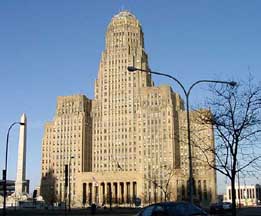
Art Deco was the first widely popular style in the United States to break with the revivalist tradition (see, for example, Gothic Revival or Greek Revival or Italianate).
The name Art Deco comes from the 1925 Exposition Internationale des Arts Decoratifs Industriels et Modernes, held in Paris, which celebrated living in the modern world. The term was coined and popularized in the late 1960s and early 1970s.
The style began in France but America became the center of the artistic movement.Art Deco was essentially a style of decoration and was applied to jewelry, clothing, furniture and handicrafts as well as buildings. Industrial designers created Art Deco motifs (patterns) to adorn their streamlined cars, trains and kitchen appliances. Art Deco ornamentation consists largely of low relief geometrical designs, often in the form of parallel straight lines, zigzags, chevrons and stylized floral motifs.
Cubism heavily influenced the shapes used in Art Deco.
Architecture
The largest concentration of Art Deco buildings is in New York City (skyscrapers) and Miami (apartment houses).
"Despite the fact that the Art Deco style flourished during harsh economic and sociologically striven times, art deco embodied luxury. Exotic animals and plants were stylized in architecture and decor. Goldtones, silvers, chromes and other reflective surfaces such as mirrors were used extravagantly. Rich leathers and inlaid surfaces were used abundantly. The machine age and man was exalted. Stylized and glamorized images of man and technology became popular in print and sculpture. As we look back, we can easily see that the Art Deco style is further based on stylized geometric shapes such as stepped forms, chevrons, sunbursts, and curves" - Tanya Lee, Decorating in the Art Deco Style (online April 2014)
Common Art Deco features:
- Vertical emphasis
- Setbacks (steplike recessions in a wall) emphasizing the geometric form
- Ziggurat and inverted ziggurat motif
- String courses
- Geometric ornament: parallel straight lines, zig-zags, chevrons, lozenges (diamondlike shape, but not a square)
- Stylized (abstracted) floral motifs
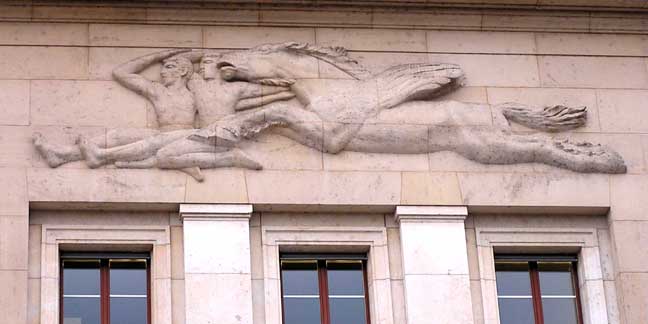
- Stylized figure sculpture, especially using bas relief on buildings
- Octagonal lamps, clocks
- Sunrise and floral patterns in ornamentation
- Intense colors in terra cotta, glass, colored glazed bricks, mosaic tiles, colored mirrors, Bakelite, steel, aluminum, and Vitrolite
- Hard-edged low relief ornamentation around door and window openings
- Stylized volutes
- Strips of windows with decorated iron grille work in surrounds to add vertical feeling
- Metal windows: sash, casement
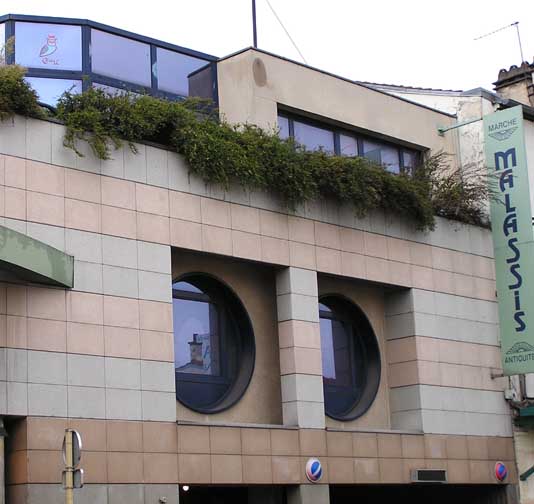
- Although straight-headed windows are more popular, an occasional circular window or rounded window and door jamb is found
- Buildings are" stripped down" to their purest forms
- New types of electrical lighting, including neon
Influences:
- Especially in Europe, various avant-garde painting styles of the early twentieth century: Cubism, Russian Constructivism and Italian Futurism
- Reaction to the sensuousness and flowing lines of Art Nouveau
- Ancient Egypt (Pharaoh Tutankhamen's tomb was discovered in 1922)
- Pre-Columbian art and architecture of the Americas
See also:
- Francis R. Kowsky, 4.2.7 Art Deco (1925-1940) in Broadway-Fillmore, Buffalo
- John Conlin, "Art Deco Style"
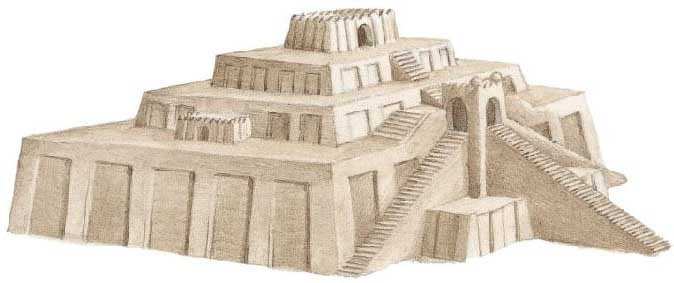
During the Depression, very few buildings (especially houses) were constructed. One exception was New York City where rectangular skyscrapers next to narrow sidewalks were being built, the result of which was that very little light was reaching the pedestrian sidewalks. Thus, in 1924, a "setback" ordinance was passed: upper stories of a tall building were stepped back from the lower stories to allow more light to reach the street. Art Deco buildings in other cities imitated the setback feature to the extent that it became a common feature for Art Deco buildings.Ziggurat
Illustration: Historia Rex (online Feb. 2017)
Built in receding tiers upon a rectangular, oval, or square platform, the ziggurat was a pyramidal structure with a flat top erected by the Sumerians, Akkadians, and Babylonians in Mesopotamia.
Ziggurat bases were square or rectangular. Their walls were sloping.
To build a ziggurat, builders stacked squares of diminishing size, like a step pyramid, but unlike a step pyramid there were stairs to climb to the next higher level.
Art Deco used both ziggarat and inverted ziggurat motifs.
Structural Glass and Art Deco
Pigmented structural glassThe dramatic growth and popularization of the early 20th century Art Deco and Moderne architectural styles were fueled, in part, by technological advances in the building materials industry. New products, such as stainless steel and plastics, enlarged the realm of architectural design. The more traditional materials, on the other hand, quickly developed fresh, innovative forms and uses. For example, the architectural glass industry became especially creative, introducing a series of new glass products known as structural glass. Used predominately for wall surfacing, these now familiar products included
- glass building blocks
- reinforced plate glass, and
- pigmented structural glass.
- Carrara Glass,
- Sani Onyx (or Rox)
- Vitrolite
The versatility of pigmented structural glass contributed to its popularity. Not only could the material be applied to both the exterior and interior, the glass could he sculptured, cut, laminated, curved, colored, textured, and illuminated. Often applied directly over existing architecture to remodel older buildings, as well as in new construction, a veneer of pigmented structural glass had the ability to define a building's architectural character as new and up-to-date. Pigmented structural glass also complemented the period's silvery metal accents and affinity for slick, shiny surfaces.
By the second decade of the 20th century, consumers viewed pigmented structural glass as an inexpensive substitute for marble counter tops, table tops, wainscoting, and restroom partitions.
- The Preservation of Historic Pigmented Structural Glass (Vitrolite and Carrara Glass)
Art Moderne
Sometimes Art Deco is distinguished from Moderne, which is a variation from Art Deco in the 1940s. Although somewhat different in their overall appearance, both styles share stripped down forms and geometric-based ornament. The distinction is not relevant is describing Art Deco furniture.
In Florida, Art Moderne is called Streamline.
Common Moderne features:
- Horizontal orientation
- Rounded edges, corner windows, and glass block walls
Art Nouveau VS. Art Deco
Art nouveau combines geometric shapes with themes from nature like insects, plants, flowers, trees and sometimes mythical fairies. Up until the period of art nouveau, these natural forms were not popular. The design is also often characterized by its organic, fluid, asymmetrical curves.
Art nouveau is decorative, ornamental, “curvy” and asymmetrical
Though art deco utilizes geometric shapes too, they are more linear, streamlined, repetitive and symmetrical. Sunburst and zigzags are two common shapes featured in art deco designs. When including natural forms, they tend to be more graphic and textural like the rough edges of a plant’s leaves or a zebra’s hide. Art deco is also recognized for its use of modern materials like chrome, wood inlays and stainless steel.
Art deco is sleek, streamlined, linear and symmetrical
Examples of Art Deco buildings in Buffalo:
- City Hall
- Central Terminal
- Pierce-Arrow Showroom
- Kleinhans Monument in Forest Lawn Cemetery
- Buffalo Industrial Bank
- Bennett Apartments
- Kensington High School
- Morris Manor Apartments
- Courier Express Building
- Vars Building
- Mabel Danahy Building / Buffalo Design Collaborative Building
- Liberty Bank Branch, 892 Genesee St.
- Rand Building
- Buffalo General Hospital - East Wing
- 800 West Ferry Venetian Gothic Revival ornamentation
- Electric Tower Interior Art Deco
- Telephone Building Annex
- Tiles and Sink - Louis Greenstein House
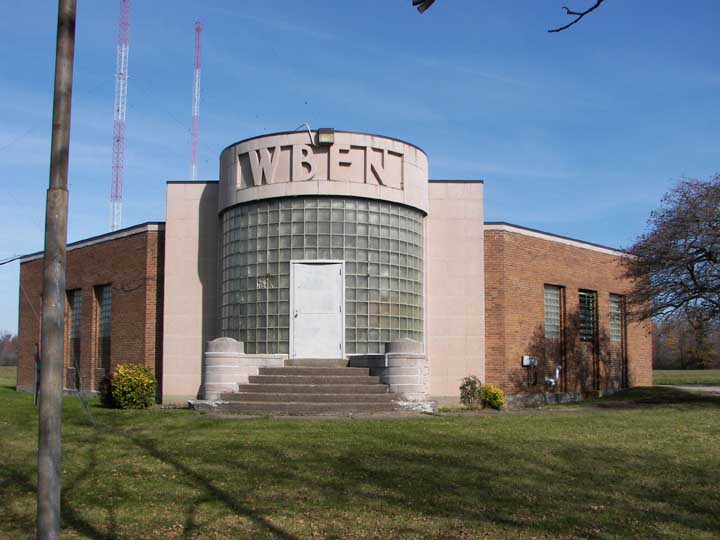
- Photo - WBEN Building, Grand Island
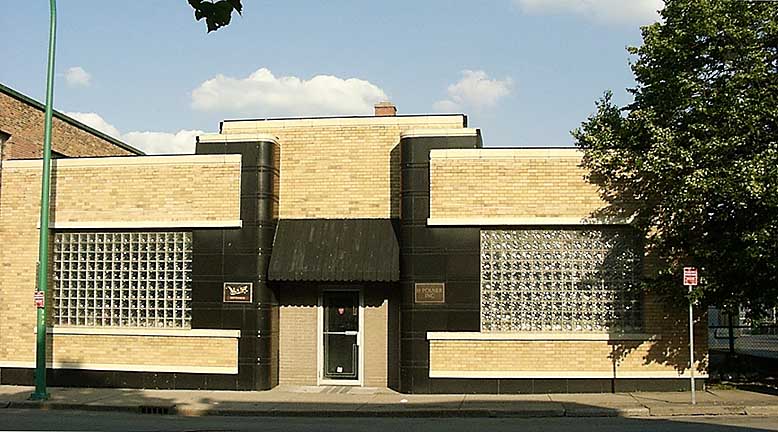
- Photo - 194 Franklin St. (Art Moderne)
- Alexander O. Levy paintings
- Buffalo Religious Art Center Stations of the Cross, paintings -
- 1933 Pierce Silver Arrow
- North Park Theatre Cigarette trash can
- North Park Theatre Illuminated sign
- Central Terminal Inverted ziggurat decoration
Examples outside of Buffalo:
- Niagara Hudson Building/Niagara Mohawk Power Building/National Grid Building of Syracuse, NY
- Norton Memorial Hall, Chautauqua Institution, Chautauqua, NY
- Aldred Building, Montreal, Canada Features stained glass window
- Art Deco Vases at the Corning Museum of Glass, Corning, New York
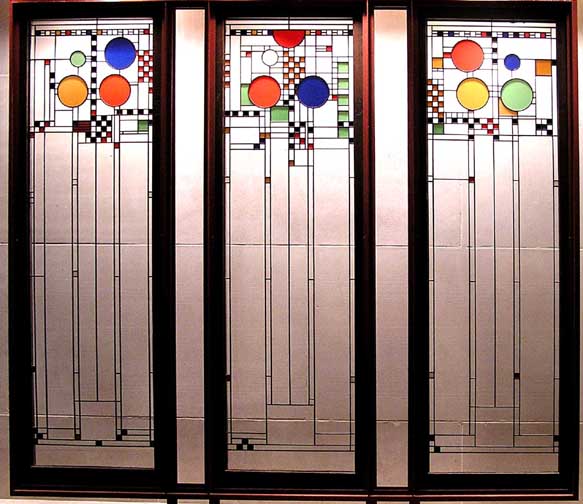
- Photos - Three Frank Lloyd Wright stained glass windows on display in the Metropolitan Museum of Art in New York City
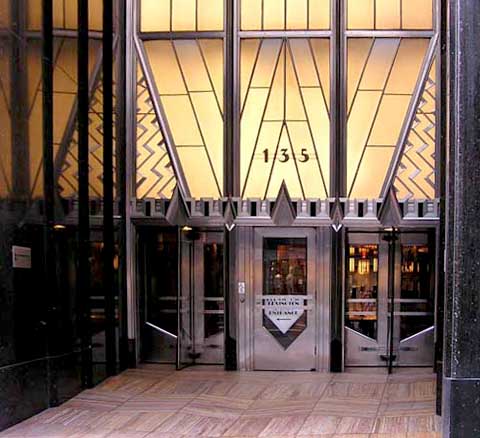
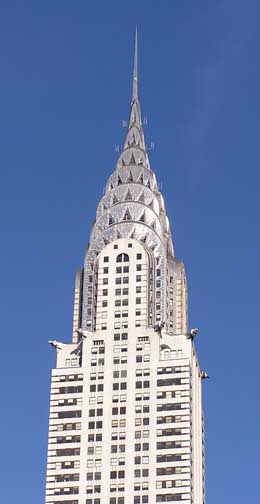
- Chrysler Building, New York City
- Photo - Entrance
- Photo - Top stories
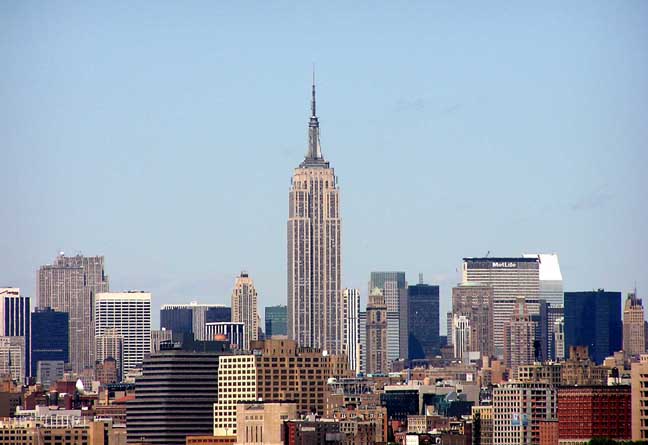
- Empire State Building, New York City
- Royal Institute of British Architects Building, London, England
- Café Americain, Amsterdam, Netherlands
- Photo - Tuscan Square, 10 W. 51st St., New York City Metal grate around a tree. Most unusual!
- Photo - Sculpture, Gare de Cornavin, Geneva, Switzerland
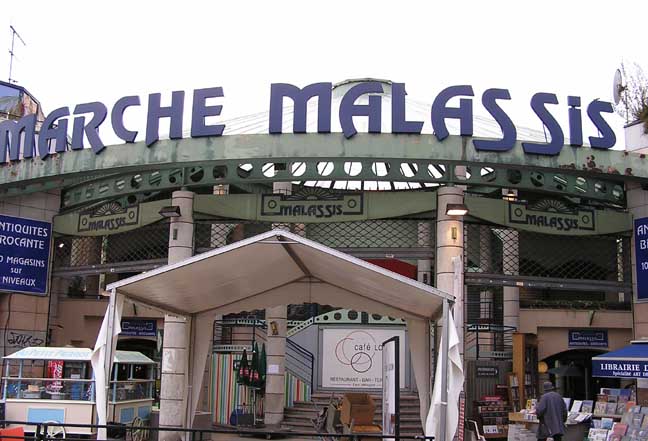
- Photo - Lettering, Marché Malassis, Paris
- Photo - Round windows, Marché Malassis, Paris
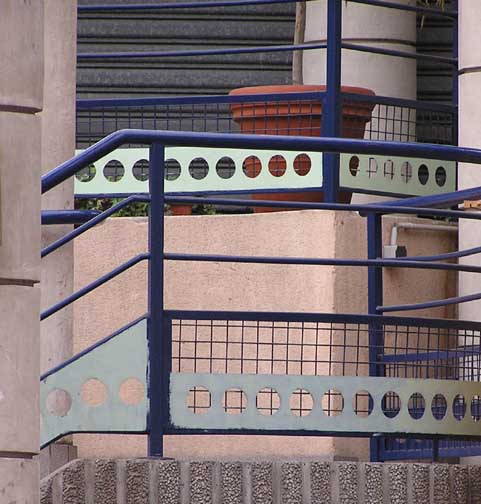
- Photo - Railing, Marché Malassis, Paris
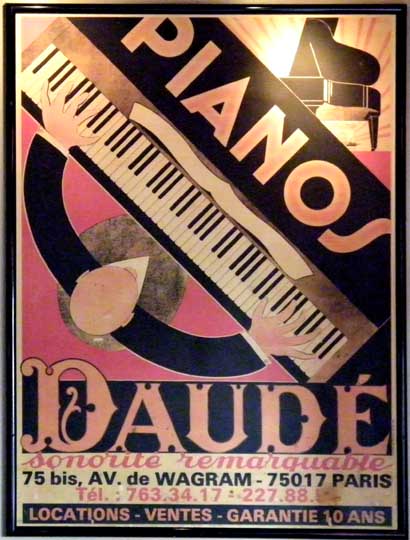
- Photo - French poster: Pianos Daudé